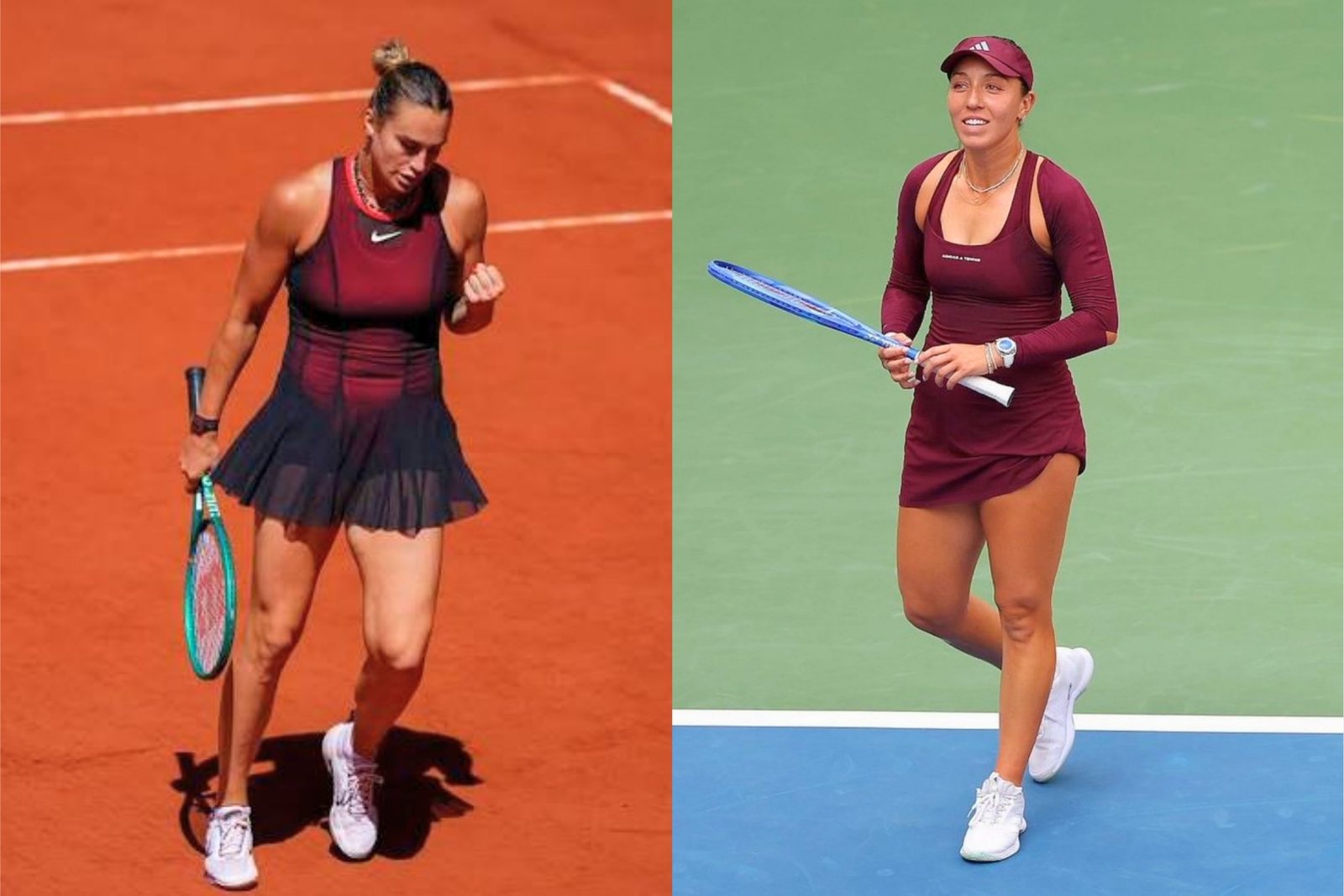
The US Open is supposed to be about tennis.
The serves, the rivalries, the comebacks, the pressure of Arthur Ashe Stadium and the players fighting for one of the biggest titles in the sport.
Yet during the opening days of the 2026 tournament, another competition has been difficult to ignore:
Nike vs. Adidas.
Instead of asking only who is playing well, fans and fashion followers are comparing who is wearing what, which brand has the best kits and which athlete is creating the biggest fashion moment.
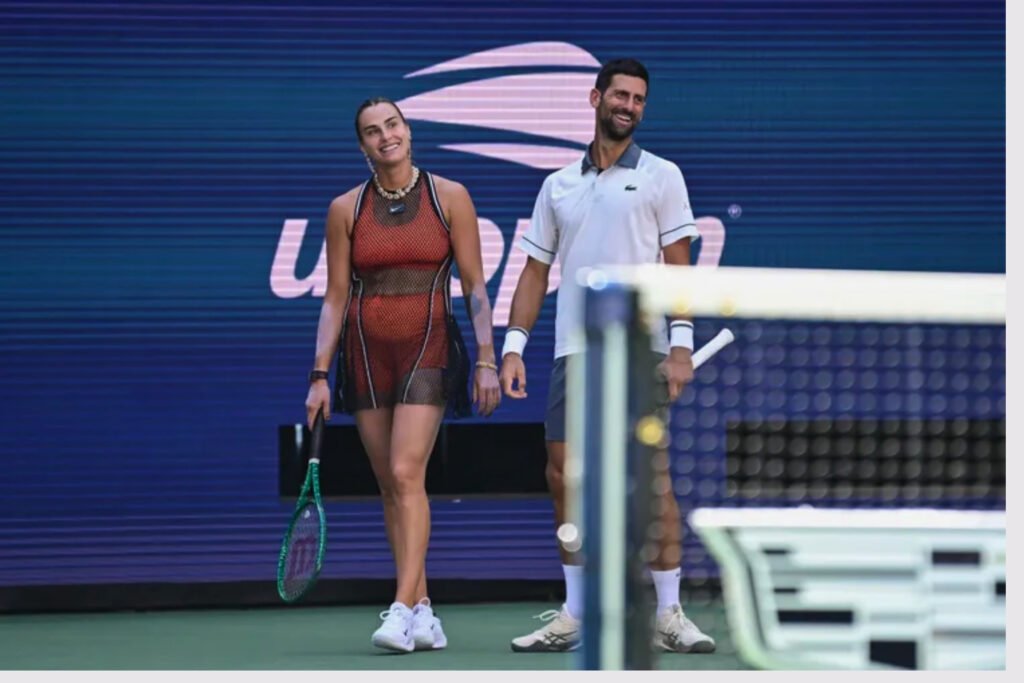
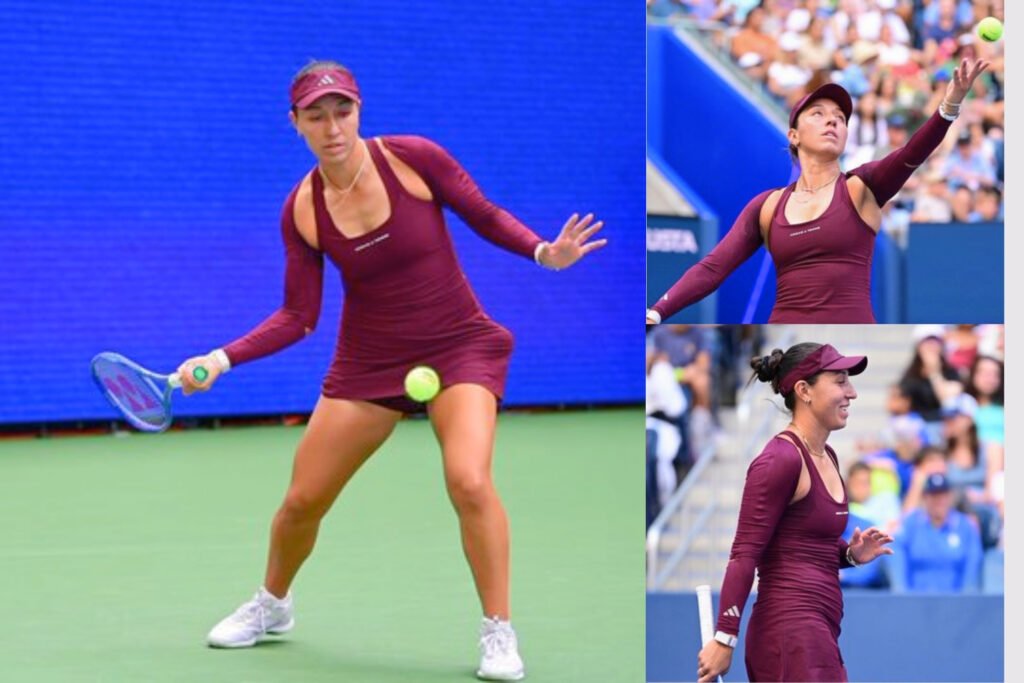
Aryna Sabalenka’s controversial Nike fishnet dress became one of the tournament’s first major fashion stories. Meanwhile, Jessica Pegula’s polished Adidas look attracted enthusiastic reactions.
Suddenly, the US Open had another scoreboard.
And that raises an interesting question:
Have sportswear brands become so focused on winning attention that they are beginning to compete with the sport itself?
The Sabalenka effect
Sabalenka’s black sheer Nike mesh dress was never going to disappear quietly.
Nike described the design as basketball-inspired, bringing mesh and a more fashion-forward silhouette into tennis. Sabalenka wore it over a bright sports bra and shorts during her mixed doubles appearance with Novak Djokovic.
The reaction was immediate — and sharply divided.
Some people appreciated the risk. Others thought the outfit looked more like a fashion statement than tennis apparel.
Sabalenka herself defended it, saying she loved the outfit and accepted that not everyone would.
That part is important.
The controversy isn’t really about whether Sabalenka should be allowed to dress boldly. She should.
The more interesting issue is why the brand chose this particular moment and this particular design.
Nike isn’t an experimental fashion house. It is a performance-sports company with enormous credibility in athletics.
When its tennis clothing becomes controversial for reasons that have little to do with performance, it is fair to ask whether the brand is pushing fashion too far.
Adidas offers a different answer
The contrast with Adidas has been striking.
Jessica Pegula’s burgundy US Open outfit attracted much more positive attention. It is fitted, modern and distinctly tennis-oriented without trying to dominate the conversation.
That doesn’t make it automatically better.
It simply demonstrates that there are different ways to make a sportswear collection memorable.
One approach says:
Look at the outfit.
The other says:
Look at the player.
The strongest sportswear usually manages to do both.
When uniforms become marketing campaigns
This isn’t entirely new.
Sportswear companies have been using major tournaments as enormous marketing platforms for decades.
But social media has changed the scale.
A player can walk onto court and, within minutes, her outfit can become a headline, a TikTok, an Instagram carousel, a fashion article and a debate among fans.
That creates a powerful incentive for brands to design something that photographs well and generates conversation.
The danger is that the tournament begins to function partly as a series of product launches.
The athlete isn’t simply competing.
She is introducing a collection.
The Grand Slam isn’t simply a sporting event.
It is also a global advertising platform.
And the US Open may be the perfect environment for this because New York has always blurred the boundaries between sport, celebrity, fashion and entertainment.
But tennis already has fashion stars
There is nothing wrong with tennis players becoming fashion personalities.
In fact, some of the most successful examples show exactly how well the combination can work.
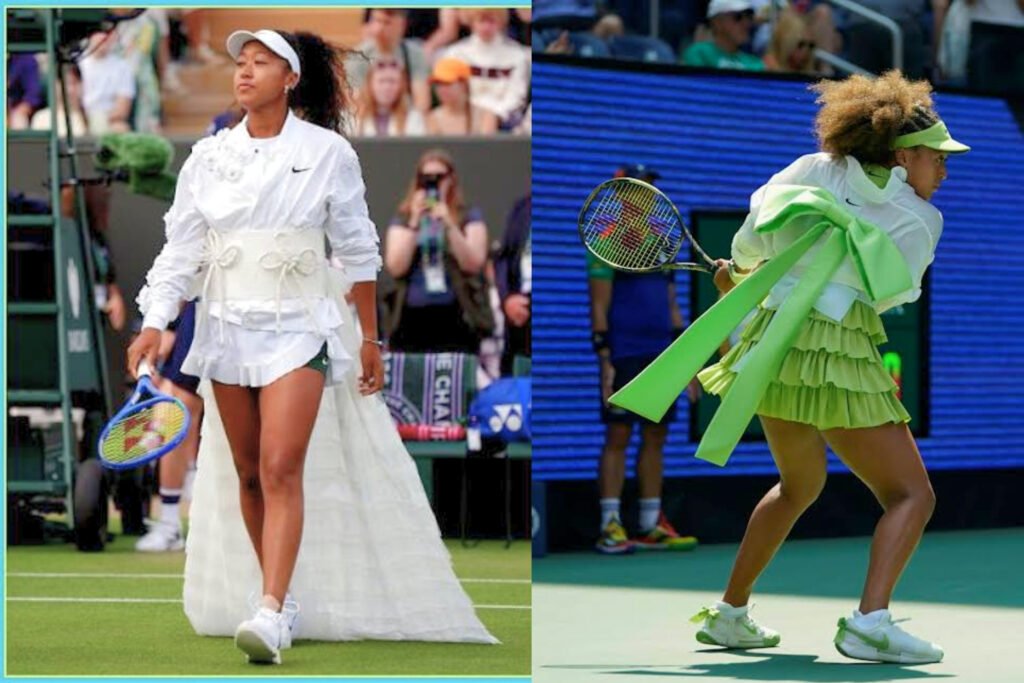
Naomi Osaka has made fashion part of her public identity. Her Grand Slam appearances frequently generate attention because the clothing feels like an extension of her personality rather than simply a sponsor’s uniform.
That distinction matters.
When an athlete has a strong personal relationship with fashion, the clothing becomes part of her story.
When the clothing exists primarily to promote a seasonal collection, the athlete can start to feel like the campaign model.
The best partnerships allow the two identities to coexist.
Nike’s bigger problem
This is where the Sabalenka controversy connects to something much larger.
Nike’s current business difficulties cannot reasonably be blamed on a tennis outfit.
The company reported approximately $46.4 billion in fiscal 2026 revenue, essentially flat year over year. Nike Direct revenue declined 6%, Nike Brand digital revenue fell 12%, and net income declined 3%.
Those numbers reflect a much broader challenge involving product momentum, direct-to-consumer sales, digital performance and competition across several categories.
So no, Sabalenka’s fishnet dress did not cause Nike’s stock problems.
But the fashion controversy does touch the same strategic question facing the company:
What does Nike stand for to consumers today?
Nike already has recognition.
It already has celebrity athletes.
It already has one of the world’s most recognizable logos.
What it needs is renewed consumer excitement around its products.
And that is much harder to create.
The danger of chasing relevance
Nike has spent decades at the intersection of sport, music, fashion and popular culture.
That strategy was enormously successful.
But cultural relevance changes.
Brands that once defined the conversation can eventually find themselves trying to catch up with it.
That is why Nike’s aggressive fashion direction is worth watching.
Is the company setting trends?
Or is it trying to generate noise because it needs to feel culturally dominant again?
Those are very different positions.
And consumers can usually sense the difference.
Nike isn’t the only brand making mistakes
This isn’t a story about Nike being uniquely incapable of getting fashion right.
Other major brands have also learned that attention can turn against them.
Adidas, for example, faced major criticism over its 2024 Bella Hadid campaign for the SL72 sneaker because of the shoe’s connection to the 1972 Munich Olympics and the historical context surrounding the Games. The 1972 Munich Olympics are heavily associated with a tragic terrorist attack by Palestinian militants who killed 11 Israeli athletes and a German police officer. Bella Hadid is half-Palestinian and a prominent advocate for Palestine. Adidas removed Bella Hadid from the ads and announced it was revising the rest of the campaign.
The problem wasn’t the sneaker.
It was the context.
Ralph Lauren faced another kind of controversy when its 2012 Team USA Olympic uniforms were criticized after it emerged that they had been manufactured in China.
Again, the clothes themselves weren’t necessarily the issue.
The issue was that the product contradicted the meaning consumers associated with the event.
These examples show that sportswear isn’t just fabric and logos.
A uniform represents something.
An Olympic uniform represents a country.
A tennis kit represents an athlete.
A campaign represents the brand.
If those meanings don’t align, the marketing can backfire.
And there is another lesson from Adidas
There is also such a thing as too much consistency.
Adidas has faced criticism in tennis when several players appeared in extremely similar outfits, prompting questions about whether the brand was making its athletes look interchangeable.
This creates an interesting dilemma for sportswear companies.
Too much experimentation can overwhelm the athlete.
Too much uniformity can erase her individuality.
The goal should be somewhere between the two.
A recognizable brand. An individual athlete. A useful piece of clothing.
All three should work together.
Are brands becoming the main characters?
This may be the bigger question for tennis.
When we watch a Grand Slam, we are supposed to develop relationships with players.
We follow their personalities, rivalries, victories and disappointments.
But the increasing influence of sportswear marketing introduces another layer.
We start following brands, too.
Nike has its athletes.
Adidas has its athletes.
Lululemon has its ambassadors.
On has its running stars.
And every tournament becomes another opportunity for those brands to demonstrate their identity.
That isn’t inherently negative.
Sports need sponsorship.
Athletes need sponsorship.
Fashion creates additional revenue and attention.
But there is a line worth protecting:
The brand should sponsor the spectacle, not become the spectacle.
Maybe the audience is changing, too
There is another reason this conversation matters.
Today’s tennis audience doesn’t necessarily separate sport from lifestyle.
Fans may watch a match, then search for the player’s shoes.
They may notice a tennis dress and want something similar for a vacation.
They may follow an athlete because of both her game and her personal style.
That is a huge opportunity for sportswear companies.
But it also means consumers are becoming more sophisticated.
They can tell when something feels authentic.
They can tell when a player genuinely likes what she is wearing.
And they can tell when a brand seems to be manufacturing a viral moment.
So, is the US Open becoming a Nike vs. Adidas competition?
Partly.
But perhaps the more accurate description is that professional tennis has become another battlefield in the larger sportswear competition for cultural relevance.
Nike wants to remain the dominant global sports brand.
Adidas wants to regain ground.
Newer companies want a larger share of the attention.
And elite tennis players are some of the most valuable people through whom those brands can reach consumers.
That competition isn’t going away.
The question is whether it can remain in the background while the tennis stays in the foreground.
What should win?
The answer should be obvious:
The players.
The brands can compete.
They can experiment.
They can create beautiful clothes.
They can take risks.
But when the conversation surrounding a Grand Slam becomes more about logos and outfits than the people actually playing, something has shifted.
Sabalenka’s fishnet dress is therefore interesting not because it is objectively good or bad.
It is interesting because it illustrates a larger transformation in professional sport.
The modern athlete is simultaneously a competitor, celebrity, fashion personality and marketing platform.
That can be empowering.
It can also become exhausting.
Perhaps the best sportswear partnership is the one that doesn’t force us to choose between the athlete and the clothes.
We notice the outfit.
We appreciate the design.
And then we get back to watching the tennis.
Because ultimately, Nike and Adidas aren’t supposed to be the reason we came to the US Open.
The players are.