
Icewine as an Experience: A Taste of Niagara, Winter & Romance
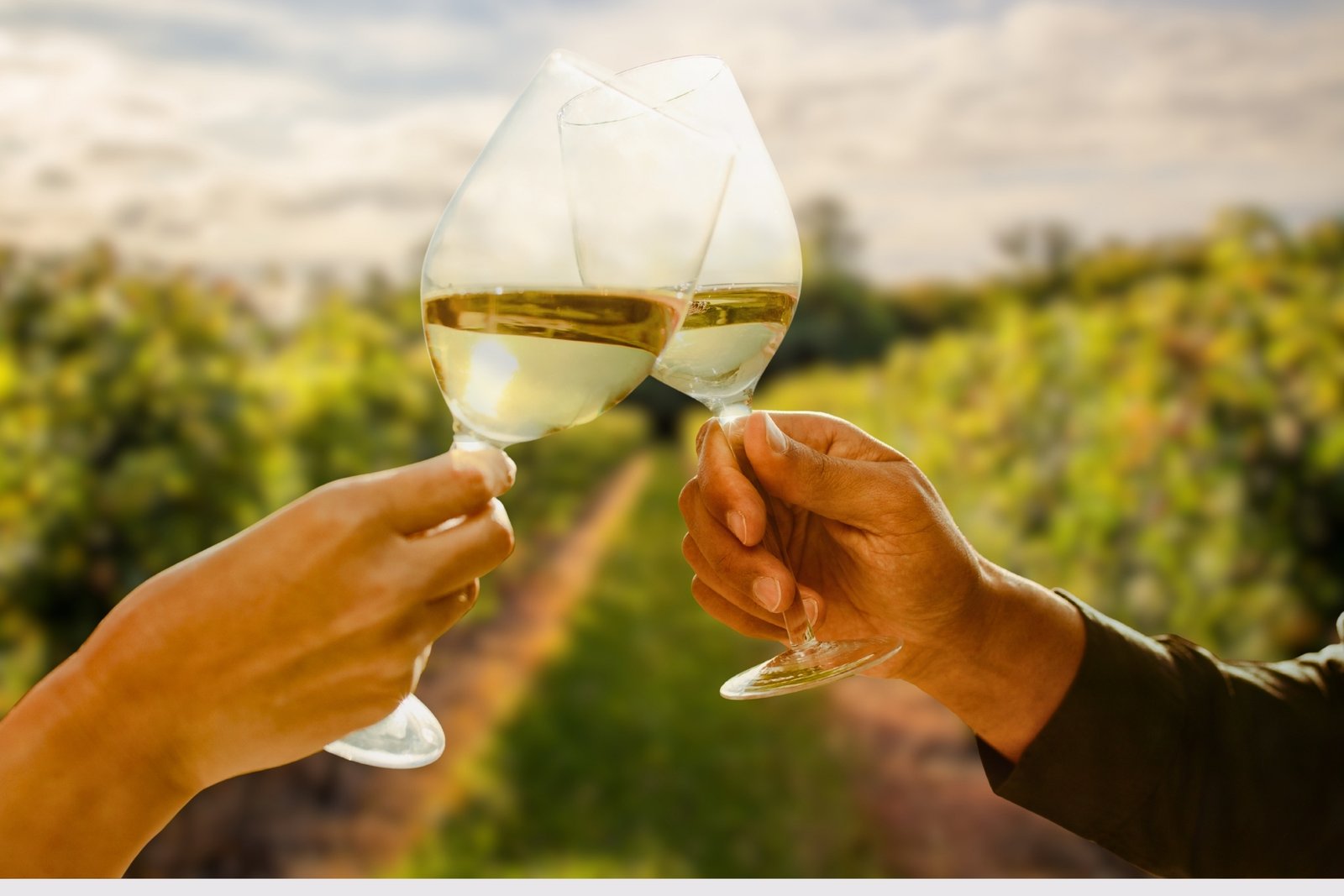
There is something romantic about visiting a winery with someone you love.
Maybe it is the wine itself—the way you slowly taste it instead of rushing through a glass. Maybe it is the scenery, the conversation over lunch, or simply having nowhere else to be for a few hours.
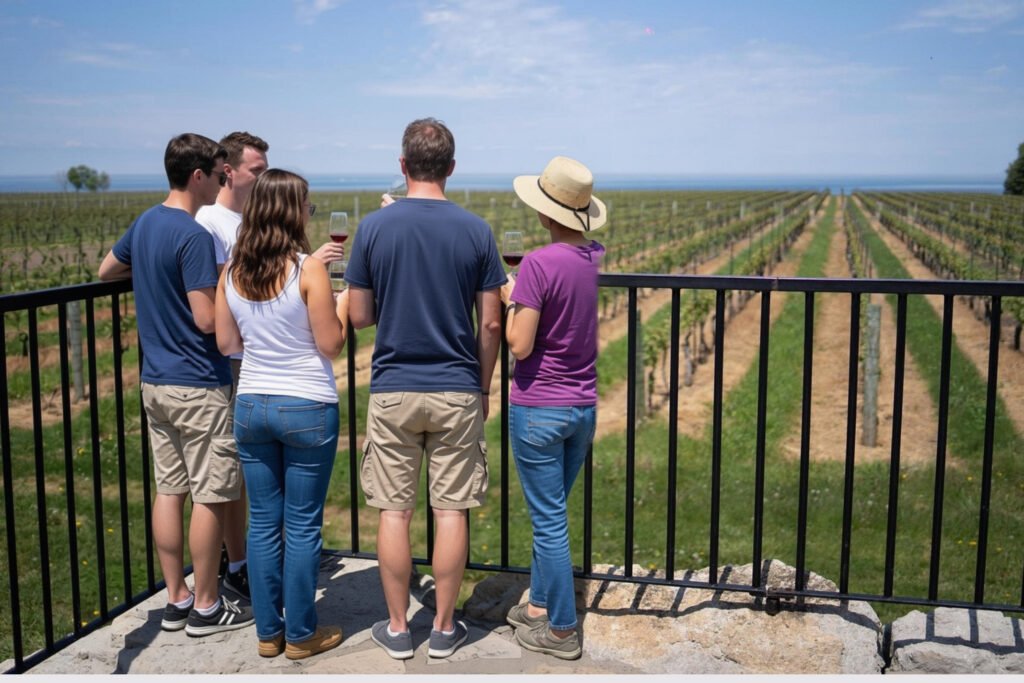
My husband and I experienced that feeling during a visit to a rustic winery in Niagara-on-the-Lake, overlooking Lake Ontario. The building had a relaxed countryside character, with stairs leading up to an upper veranda where we could look across the vineyard toward the lake.
It was the kind of setting that makes you want to stay a little longer.
We tasted wine, enjoyed the view, and simply took in the atmosphere. We visited during the warmer months, when the vineyard was green and the area was full of visitors. But learning more about Icewine gave that summer experience another dimension.
The wine culture of this region is deeply connected to something we usually associate with the opposite of a wine-country day: winter.
Grapes are left on the vine. Temperatures fall. Winemakers wait for the right conditions. And eventually, the cold transforms those grapes into one of Canada’s most distinctive wines.
That is what makes Icewine culture so fascinating.
It isn’t only about the bottle.
It is about the place, the season, the people, and the experience surrounding it.
What Makes Icewine So Special?
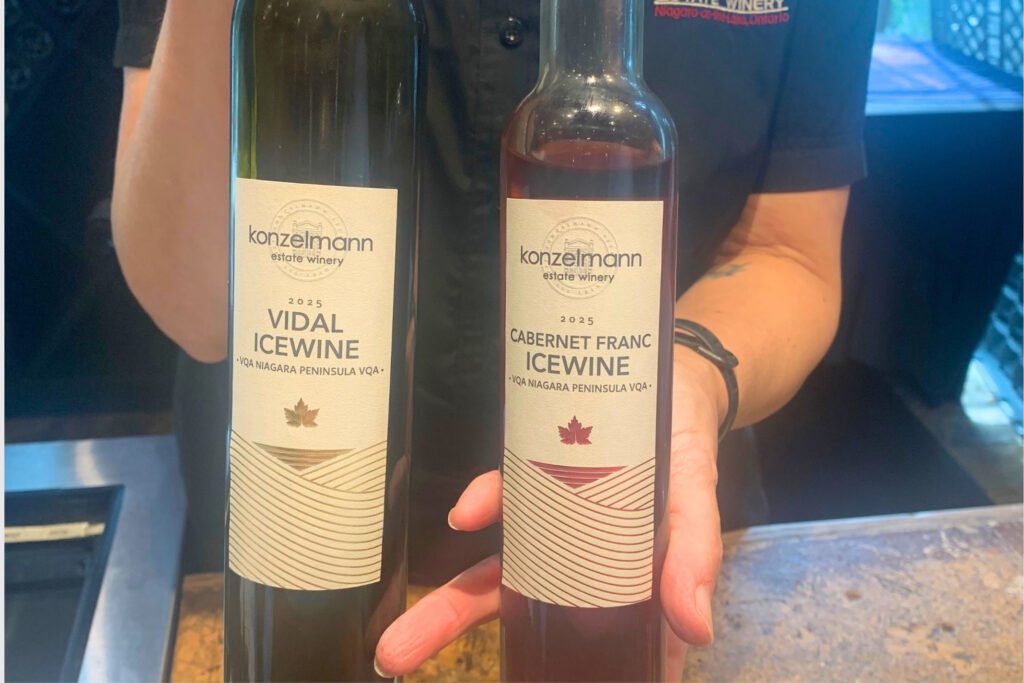
Icewine is one of the most distinctive products of Canadian wine country.
Unlike grapes harvested for ordinary table wine, Icewine grapes are intentionally left on the vine well after the normal fall harvest. Winemakers wait for the grapes to freeze naturally.
In Ontario, VQA Icewine grapes must be harvested when the temperature falls below -8°C (17.6°F) and pressed while they are still frozen. The freezing process concentrates the sugars, acids, flavours, and aromas in the remaining juice.
The result is a wine that is sweet, intensely fruity, aromatic, and balanced by vibrant acidity.
It is easy to understand why Icewine is often described as liquid gold.
The grapes produce only a small amount of concentrated juice, and the timing of the harvest depends on nature. It is not simply a matter of deciding that it is time to pick.
The weather has to say so.
How Icewine Became a Canadian Tradition
Icewine did not originate in Canada. Its roots are associated with European wine traditions, particularly Germany and Austria.
But Canada’s climate gave the tradition a new home.
In Ontario, winemakers began experimenting with Icewine in the early 1980s, and the first commercial Icewine was produced in 1984. The breakthrough came in 1991, when an Ontario Icewine made by Inniskillin won the Grand Prix d’Honneur at Vinexpo in Bordeaux, bringing international attention to Canadian Icewine.
That moment helped establish Ontario as a serious Icewine-producing region.
Today, Ontario produces more than 95 percent of Canada’s Icewine, making it an important part of the province’s wine identity.
So although the idea of Icewine came from Europe, Canada turned it into something closely associated with its own landscape and climate.
Why Niagara Is at the Heart of the Story
The Niagara Peninsula has an unusually helpful combination of warm summers and cold winters.
The long growing season gives grapes time to ripen on the vine. Then winter brings the freezing temperatures necessary for Icewine production.
That balance is essential.
The grapes cannot simply be left outside indefinitely. They need to remain healthy and sufficiently ripe before winter arrives, and then the temperatures have to fall to the required level.
This is why Niagara is such a natural home for Icewine.
The region’s climate is not simply part of the scenery.
It is part of the winemaking process.
The Romance of Waiting for Winter
There is something almost poetic about the idea.
Imagine the normal grape harvest has already finished. Autumn has passed. The leaves are falling and winter is approaching.
Most people are thinking about staying warm indoors.
But somewhere in the vineyard, grapes are still hanging on the vines.
The winemaker is waiting.
Eventually, the temperature drops enough.
The harvest begins.
Frozen grapes are picked and pressed while they are still frozen, often during the coldest hours when the necessary conditions are met. Because freezing reduces the amount of juice that can be extracted, the yield is small compared with a conventional harvest.
It is a different kind of luxury.
Not rushed.
Not mass-produced.
Something valuable created by patience, climate, and timing.
Our Niagara Wine Country Experience
That connection between wine and place is exactly what stayed with me from our visit.
The winery had a relaxed, rustic character. We could walk up the stairs to the upper veranda and look across the vineyard toward Lake Ontario.
It was beautiful.
And there is something especially nice about experiencing a place like that with your husband. You have a glass of wine in front of you, a view stretching into the distance, and no reason to hurry through the afternoon.
You talk.
You taste.
You look at the view.
And suddenly, time feels a little slower.
For me, that is part of the romance of wine country.
It does not have to be a grand occasion.
Sometimes it is simply a beautiful view, a glass of wine, and someone you love sitting across the table from you.
Summer in Niagara: Wine, Food & Bikes
Our visit was during the warmer months, when Niagara wine country feels completely different from the quiet winter landscape associated with Icewine.
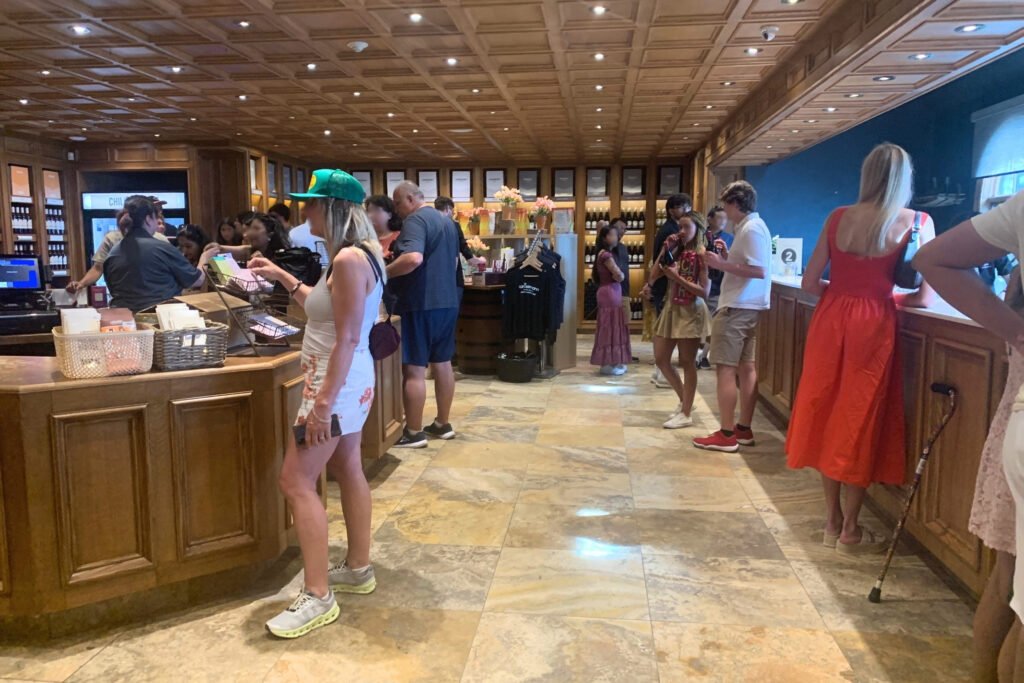
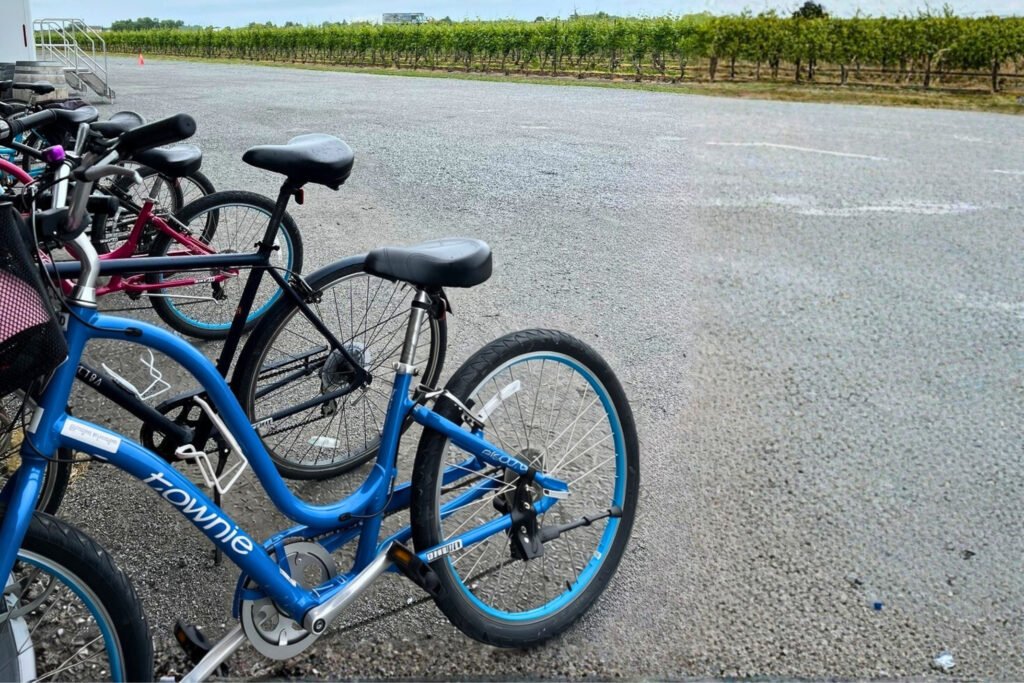
Summer brings vineyards at their greenest, busy tasting rooms, outdoor dining, tour buses, and plenty of cyclists making their way between wineries.
It can be very touristy.
But that is also part of the experience.
People come for winery tours, lunches, dinners, tastings, and leisurely afternoons in the countryside. Organized tours make it easy to visit several wineries in one day, while cycling has become another popular way to explore the region.
There is something charming about seeing groups of friends, couples, and cyclists moving through the vineyards while buses arrive at nearby wineries.
You can make a whole day of it.
Taste wine at one winery.
Have lunch at another.
Stop for a tasting somewhere else.
Ride through the countryside.
Finish the day with dinner and a view.
It feels less like checking attractions off a list and more like allowing the day to unfold.
Plan Ahead for the Best Experience
One thing we noticed is that popular wineries can become quite busy, especially in summer.
If you want to sit down for lunch or dinner, particularly at a table with a beautiful vineyard or lake view, booking ahead is a smart idea.
This is also where winery tours can be useful. They make it possible to visit multiple wineries without worrying about driving between them, and they are especially convenient when wine tasting is the main purpose of the day.
For a couple, it can also make the experience more relaxed.
You can concentrate on the wine, the food, the conversation, and the scenery instead of the logistics.
Let the Winery Surprise You
When you arrive, you can choose from the wine menu, but don’t be afraid to ask what they are featuring that day.
That simple question can lead you to something you might not have chosen on your own.
Wine tasting is part discovery.
You don’t need to know everything before you begin. Ask about the varieties, compare different styles, and see what you enjoy.
And when you find a bottle you love, take it home.
We did.
There is something satisfying about buying a bottle directly from the winery after spending time there. Later, when you open it at home, it can bring back the memory of the vineyard, the lake, and the afternoon you shared.
A bottle can become a little souvenir of a place.
Icewine Isn’t Just About Dessert
Icewine is naturally sweet, so it is often associated with dessert—and it is wonderful alongside fruit desserts, pastries, and cheese.
But its acidity gives it more versatility than you might expect.
Ontario Icewine is also paired with rich foods and can work surprisingly well with spicy dishes.
Because the wine is so concentrated, it is generally enjoyed in smaller pours.
That suits the character of the experience.
Icewine is not something to rush through.
It is something to taste slowly.
Winter Is When the Story Comes Full Circle
Summer is when Niagara shows off its vineyards.
Winter is when you truly understand Icewine.
As temperatures fall, winemakers begin watching the forecast carefully. Once the grapes reach the required freezing temperature, the harvest can finally begin.
The landscape becomes quieter, the vineyards change colour, and the weather that seems so harsh becomes essential to the wine.
That is the fascinating contradiction at the heart of Icewine:
The cold is not the enemy. The cold is the ingredient.
Niagara also embraces this season through Icewine-focused festivals, tastings, and culinary experiences, turning winter into one of the region’s most distinctive travel seasons.
Icewine as a Canadian Experience
What makes Icewine important to Canada is not simply that it is sweet, unusual, or beautiful to serve.
It represents a much bigger idea.
Canadian winemakers took a climate that could easily be viewed as a limitation and turned it into an advantage.
Warm summers help the grapes ripen.
Cold winters create the conditions for Icewine.
The vineyard and the weather work together.
And in Niagara, that relationship has helped create an entire wine-tourism culture around it.
Today, a visit to Niagara wine country can be a romantic weekend, a leisurely lunch, a cycling trip, a food-and-wine adventure, or simply a day spent enjoying the countryside.
Icewine gives all of those experiences another layer of meaning.
A Bottle That Holds a Memory
That is what I love most about wine experiences.
Eventually, the wine becomes connected to a place.
For my husband and me, I do not remember only what we tasted.
I remember the rustic building.
The stairs leading to the upper veranda.
The vineyard below us.
Lake Ontario stretching beyond it.
The lively summer atmosphere.
And the feeling that we could simply sit there together and enjoy the moment.
We visited Niagara in summer, but Icewine gave us a glimpse into winter—a season that quietly shapes one of the region’s most distinctive wines.
Perhaps that is the real beauty of Icewine culture.
It begins with a frozen grape, but it ends with an experience.
And sometimes, the best experiences are the ones you share slowly—with a beautiful view, a glass of wine, and someone sitting across the table from you.