
Yesterday, my husband and I went to Chautauqua Institution for what happened to be the final day of the 2026 summer season.
And, of course, it rained.
Not the kind of weather you normally order for a lakeside getaway. The sky was gray, the lake was quiet, and umbrellas were everywhere.
But somehow, none of that mattered.
There was still something wonderfully cheerful about Chautauqua.
People were walking around slowly, talking, laughing, meeting friends, going to performances, having lunch and simply enjoying being there. Nobody seemed particularly bothered by the weather. If anything, the rain seemed to make the whole place feel even more peaceful.
By the time we left, we realized something: we felt better than when we arrived.
And that, I think, is part of the magic of Chautauqua.
What exactly is Chautauqua Institution?
If you have never been, Chautauqua can be a little difficult to describe.
It is not quite a resort. It is not a college campus, although education is at its heart. It is not simply a cultural center, either.
Chautauqua Institution is a 750-acre lakeside community and nonprofit educational center on Chautauqua Lake in southwestern New York. It was founded in 1874 as an educational experiment and gradually grew into a remarkable combination of education, religion, arts, recreation and community life.
During the nine-week Summer Assembly, thousands of people live and stay within the grounds. The programming brings together lectures, concerts, theater, visual arts, worship, classes, recreation and conversations about some of the biggest questions facing society.
But there is another side to Chautauqua that is harder to put into an official description.
It is slow.
People actually seem to have time.
They sit outside. They walk. They talk to strangers. They go to lectures or performances. They have dinner with friends. They sit by the lake.
And there is very little sense that everyone needs to be somewhere else.
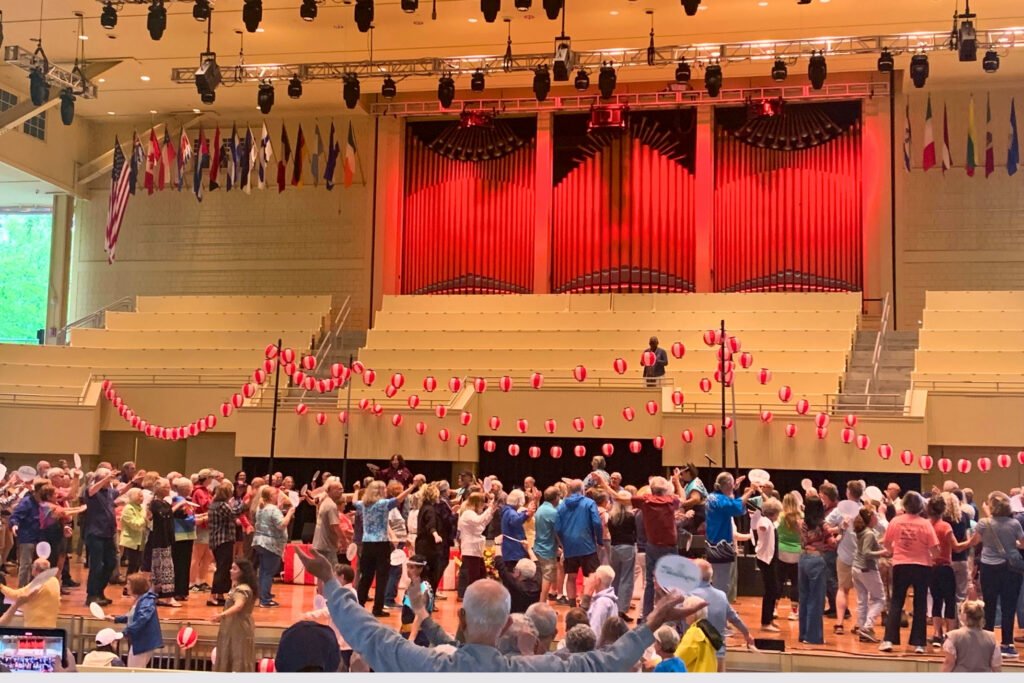
A rainy brunch overlooking the lake
Our day began at the historic Athenaeum Hotel, where we had brunch at Heirloom Restaurant.
The restaurant overlooks Chautauqua Lake, and even on a rainy day, the view was beautiful.
There is something particularly appropriate about having a leisurely meal here. The atmosphere encourages you to sit a little longer, look outside, talk, and enjoy the moment rather than rush through lunch.
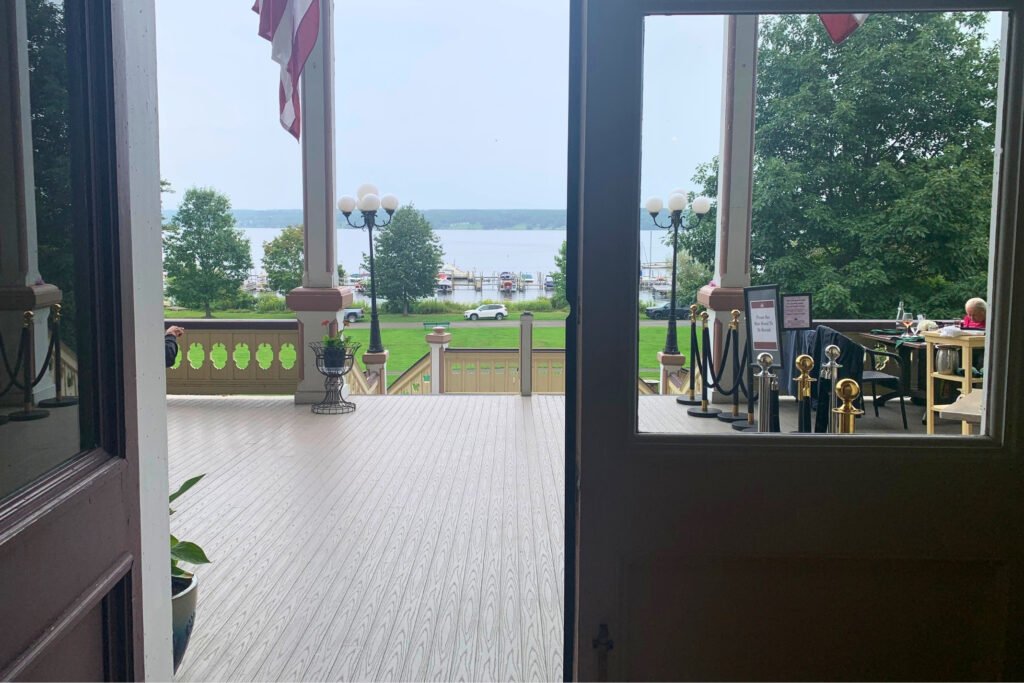
The Athenaeum itself is one of the defining landmarks of Chautauqua. The historic hotel sits directly on the lake and has been part of the Chautauqua experience for generations. Today it remains one of the main places to stay, combining the old-fashioned character of the Institution with the comfort of a full-service hotel.
And yes, we were there on the restaurant’s final day of the season. That made the brunch feel almost like part of the closing celebration.
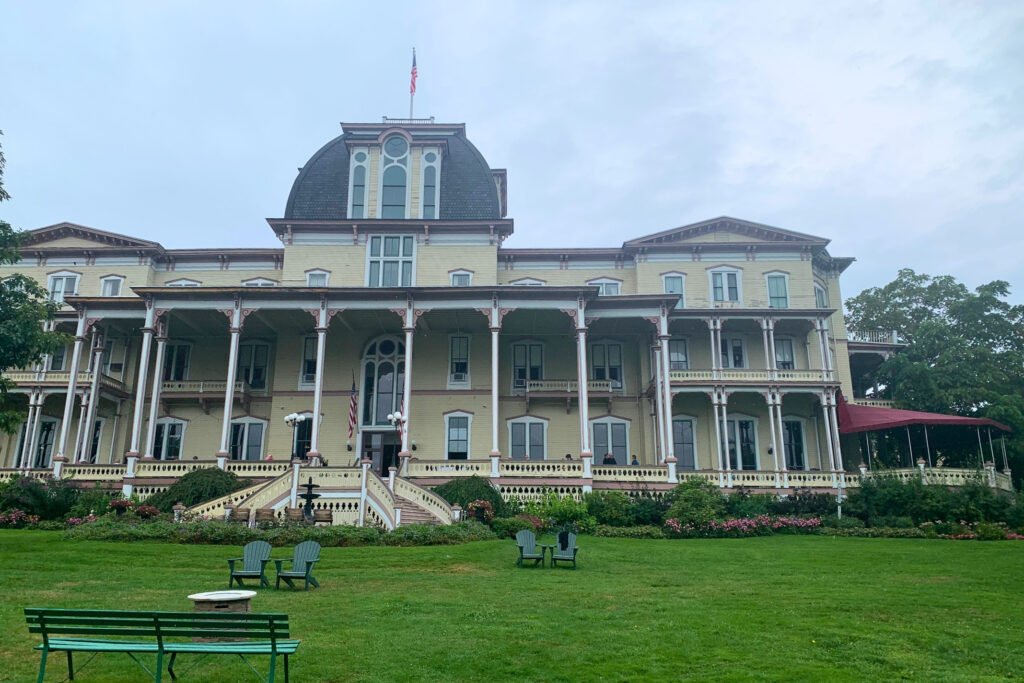
Walking through a village that feels like another time
After brunch, we walked around the grounds.
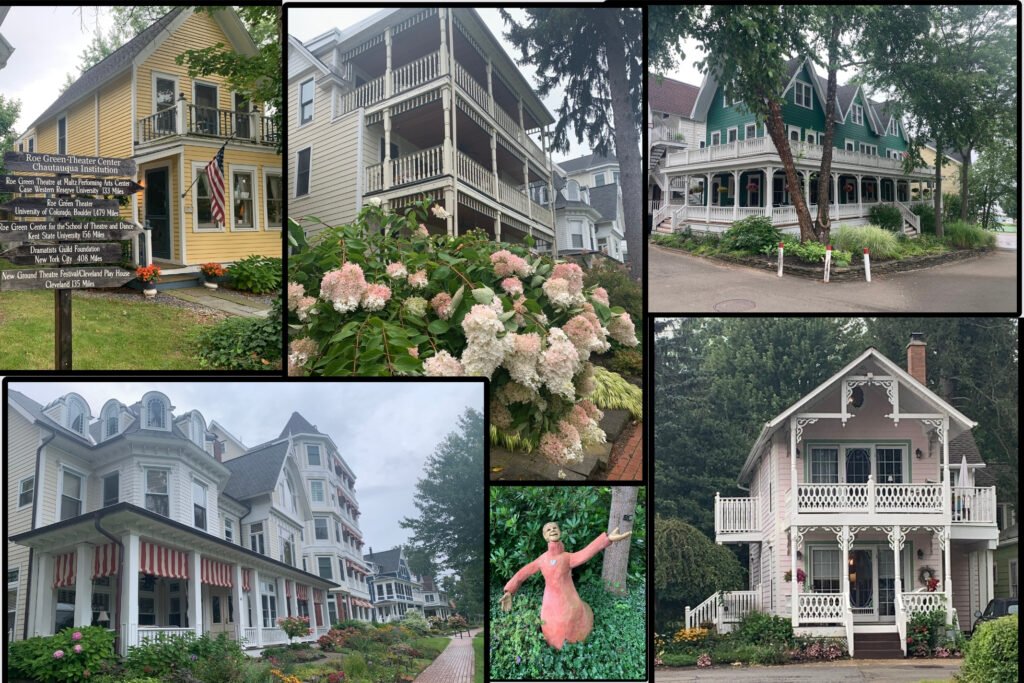
This is one of my favorite things about Chautauqua: the village itself is part of the experience.
Historic houses, cottages, inns, religious buildings, gardens and leafy streets are woven together around the lake and the Institution’s public spaces.
You don’t feel as though you are walking through a traditional tourist attraction. It feels like a real community — because it is one.
And then there are the denominational houses.
Chautauqua has a fascinating tradition of religious organizations maintaining houses within the community. They provide places for worship, programs, lectures and accommodations during the summer season.
I found this especially interesting because the buildings aren’t simply places of worship. They contribute to the social fabric of Chautauqua.
People with different religious traditions come together in the same small community, stay nearby, attend programs, have conversations and share the experience.
That feels very Chautauqua.
And then there was the Chautauqua Belle
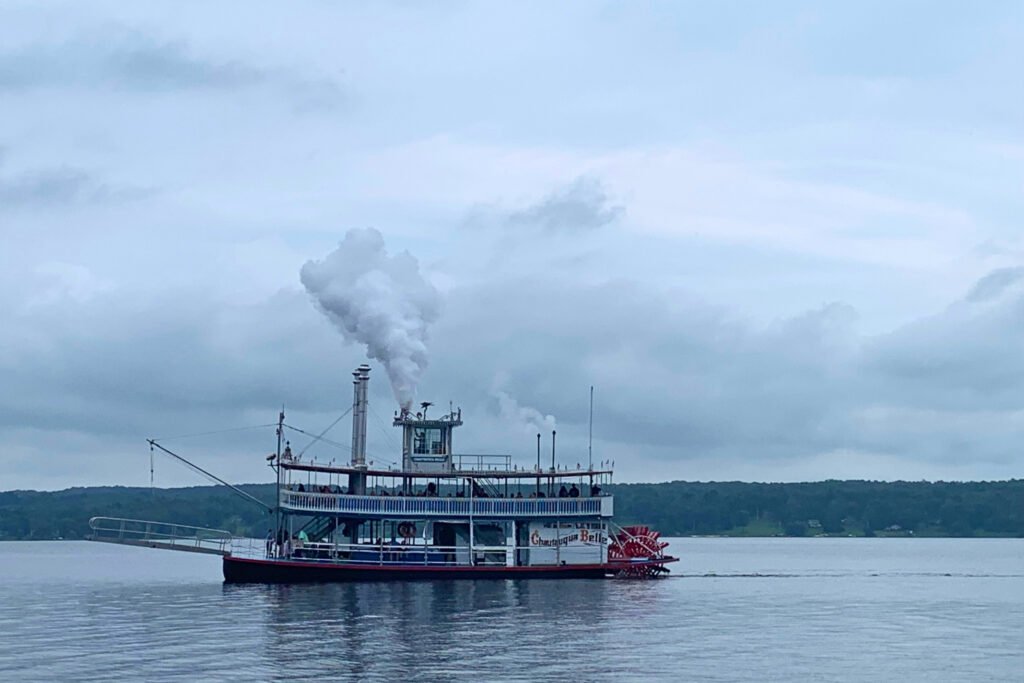
As we walked along the lake, we saw the Chautauqua Belle, the beautiful Mississippi River-style sternwheel steamboat.
Even sitting at the dock, it looks like something from another era.
The Belle was built in Mayville between 1974 and 1976 and made its maiden voyage on July 4, 1976, as part of the country’s Bicentennial celebration. Today it remains an authentic steam-powered sternwheel boat and is one of only five operating passenger sternwheel steamboats in North America.
The boat operates on Chautauqua Lake and offers narrated historical cruises. It is another reminder that Chautauqua isn’t just about looking backward — it is a living community that has preserved pieces of its history and incorporated them into everyday life.
Ending the season with an Obon celebration
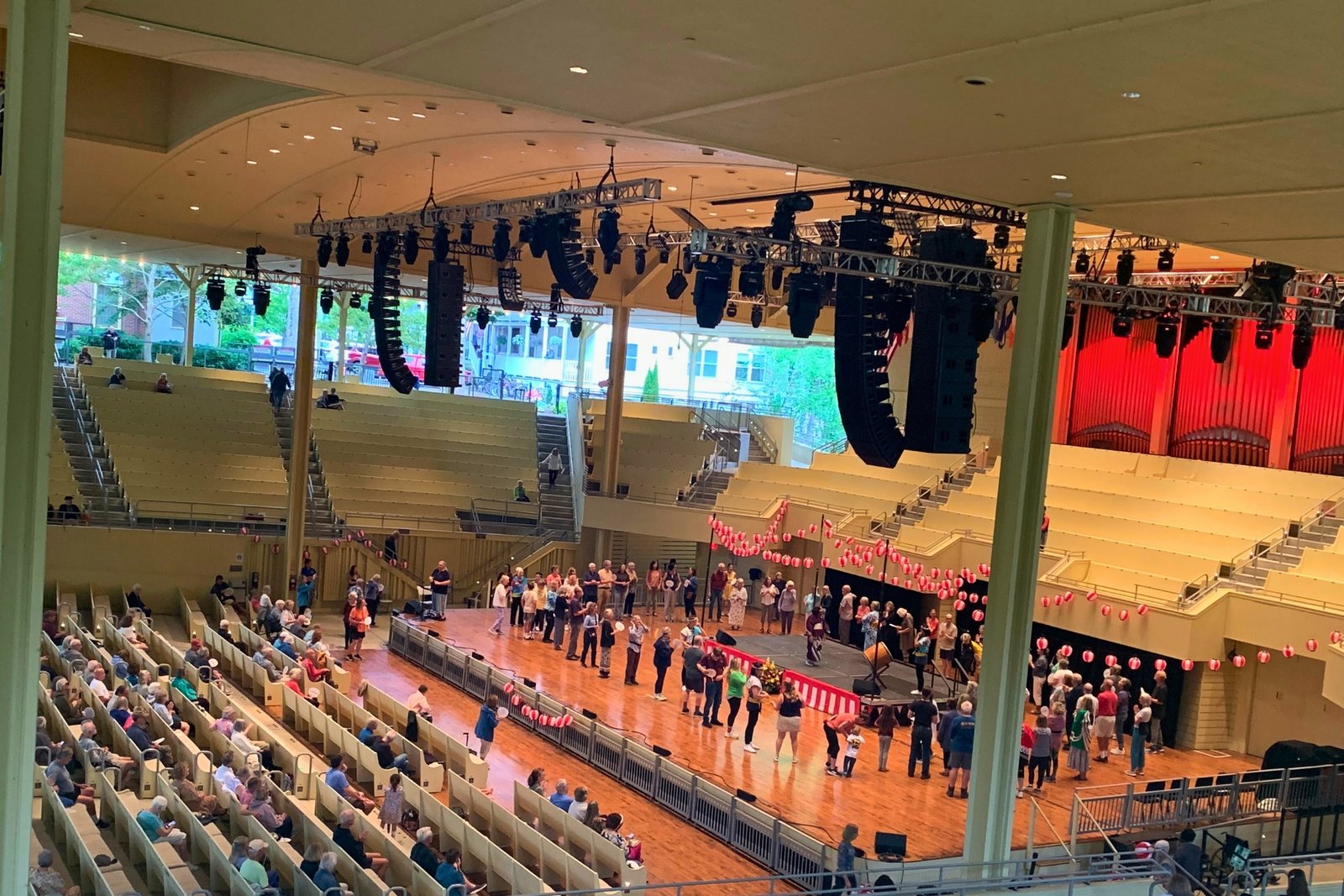
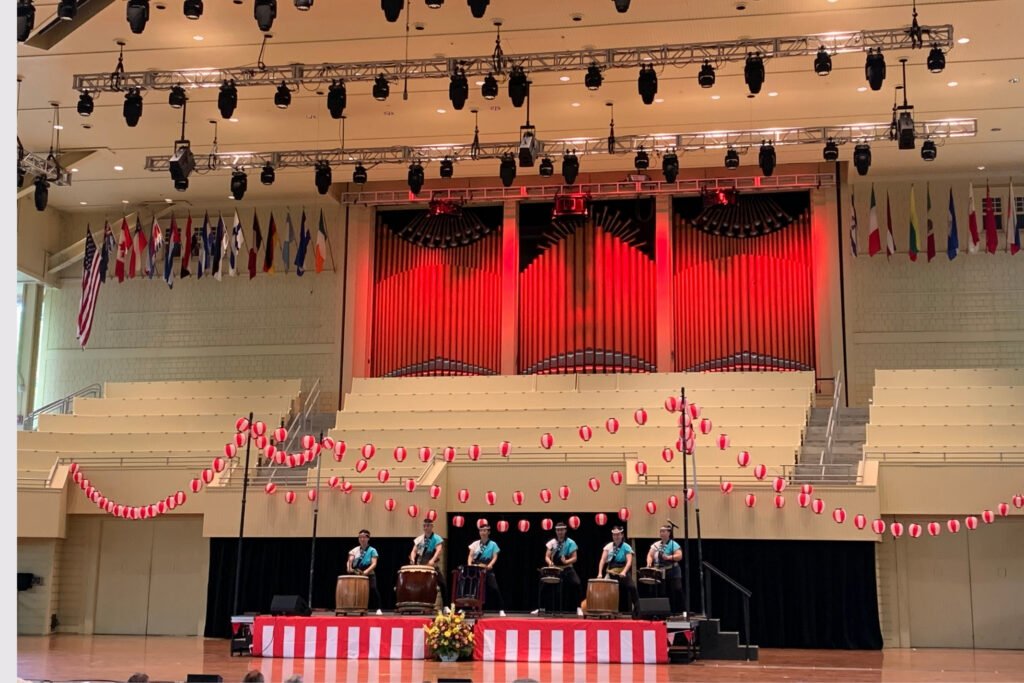
The highlight of our visit was the evening performance celebrating Obon, the Japanese tradition of honoring ancestors through dance, music, remembrance and community.
The event was led by Adrienne Reiko Iwanaga, a 2025 NEA National Heritage Fellow and Bon Odori teacher, and included reflections from Buddhist scholar George Tanabe and performances by New York City’s Soh Daiko.
There were lanterns, fans, taiko drums, Japanese treats and, most importantly, an invitation for everyone to participate.
You didn’t have to be an experienced dancer.
You didn’t have to know the traditions.
You could simply join.
And that seemed like the perfect way to close the Chautauqua season.
The event wasn’t about watching from a distance. It was about participating in something together — honoring the past while creating a shared experience in the present.
After a summer built around conversations, performances, religion, education, music and community, ending with dance and music felt almost poetic.
The Chautauqua experience is surprisingly social
One thing I noticed throughout the day was how friendly people were.
There was no feeling of exclusivity.
People smiled. They talked. They seemed comfortable starting conversations. Couples walked together. Families moved around with children. Older visitors sat alongside younger ones.
And although Chautauqua has an intellectual and cultural reputation, it doesn’t feel overly serious.
There is plenty of learning, but there is also plenty of fun.
That’s an important distinction.
You can spend the morning listening to a serious lecture, have lunch overlooking the lake, walk through historic streets, watch a performance, meet friends for dinner and end the evening dancing to taiko drums.
It is an unusual combination.
You can visit for a day — or stay for the summer
You don’t have to commit to a full Chautauqua summer to experience it.
During the Summer Assembly, visitors can purchase different types of admission, including daily tickets, evening event tickets and longer-term gate passes. In 2026, the season ran from June 27 through August 30.
A daily visit can be enough to get a taste of the place.
But staying overnight changes the experience.
Chautauqua offers the historic Athenaeum Hotel, private homes and condos, inns, denominational houses and other accommodations. The Institution’s accommodation system currently lists more than 100 nightly rental properties, while some properties are available for longer stays.
The denominational houses are particularly unusual. For visitors interested in the cultural and religious character of Chautauqua, staying in one can be part of the experience rather than simply a place to sleep.
And you don’t have to wait until next summer
This may be one of the most appealing things about Chautauqua.
The summer season is the busiest and most programmed time, but Chautauqua doesn’t simply disappear when August ends.
The Institution welcomes visitors throughout the year, although the Summer Assembly is its primary season. Outside summer, a gate pass is not required to enter the grounds, although individual events may require tickets.
The Athenaeum Hotel also operates beyond the summer season. In spring and fall, it hosts conferences, weddings and special events and welcomes guests who simply want to enjoy Chautauqua’s grounds during the quieter months.
That makes an offseason visit particularly appealing if your goal is peace rather than programming.
The lake is still there.
The historic buildings are still there.
The walking paths are still there.
And the atmosphere is quieter.
For a couple looking for a relaxing weekend rather than a packed itinerary, that may actually be the best time to experience it.
Where to stay and eat
For a classic Chautauqua experience, the Athenaeum Hotel is the obvious choice. Its lakeside location puts you right in the middle of the historic community, and Heirloom Restaurant provides on-site dining.
During the summer season, however, there are many other possibilities, including private homes, condos, inns and denominational houses. The official Chautauqua accommodation system is particularly useful because many of the properties are privately owned.
For dining, summer visitors have considerably more choices, including Heirloom, the Brick Walk Café, 3 Taps, The A Truck, The Coffee Gazebo and other seasonal options. Some of these are specifically seasonal, so restaurant availability changes significantly once the Summer Assembly ends.
For an offseason visit, I would recommend checking restaurant hours before arriving rather than assuming the summer dining schedule continues.
Maybe that’s what we loved most
By the end of our rainy day at Chautauqua, I realized that we hadn’t done anything particularly extraordinary.
We had brunch.
We walked.
We looked at the lake.
We admired historic buildings.
We watched a beautiful performance.
We listened to music.
We watched people having a good time.
And yet, somehow, it felt like a very full day.
Maybe that’s the secret.
Chautauqua doesn’t constantly demand your attention. It gives you room to notice things.
A lake.
A historic house.
A conversation.
A beautiful piece of music.
A stranger smiling at you.
A boat that still runs on steam.
A group of people dancing together in the rain.
And when you leave, you may find that you are moving a little slower than when you arrived.
And feeling a little better, too.
That is the Chautauqua feeling.
Practical note for the article
I would include a small “Planning Your Visit” box at the end with:
- 2026 Summer Assembly: June 27–August 30
- Best for: lectures, concerts, theater, worship, classes and a lively community atmosphere
- Day visit: Daily and event-specific tickets are available
- Overnight: Athenaeum Hotel, private rentals, inns and denominational houses
- Offseason: Grounds remain accessible without a summer gate pass; events may have separate admission
- For a quieter experience: Consider spring or fall
- Boat: Chautauqua Belle operates seasonally, with cruises extending into fall depending on the schedule.