
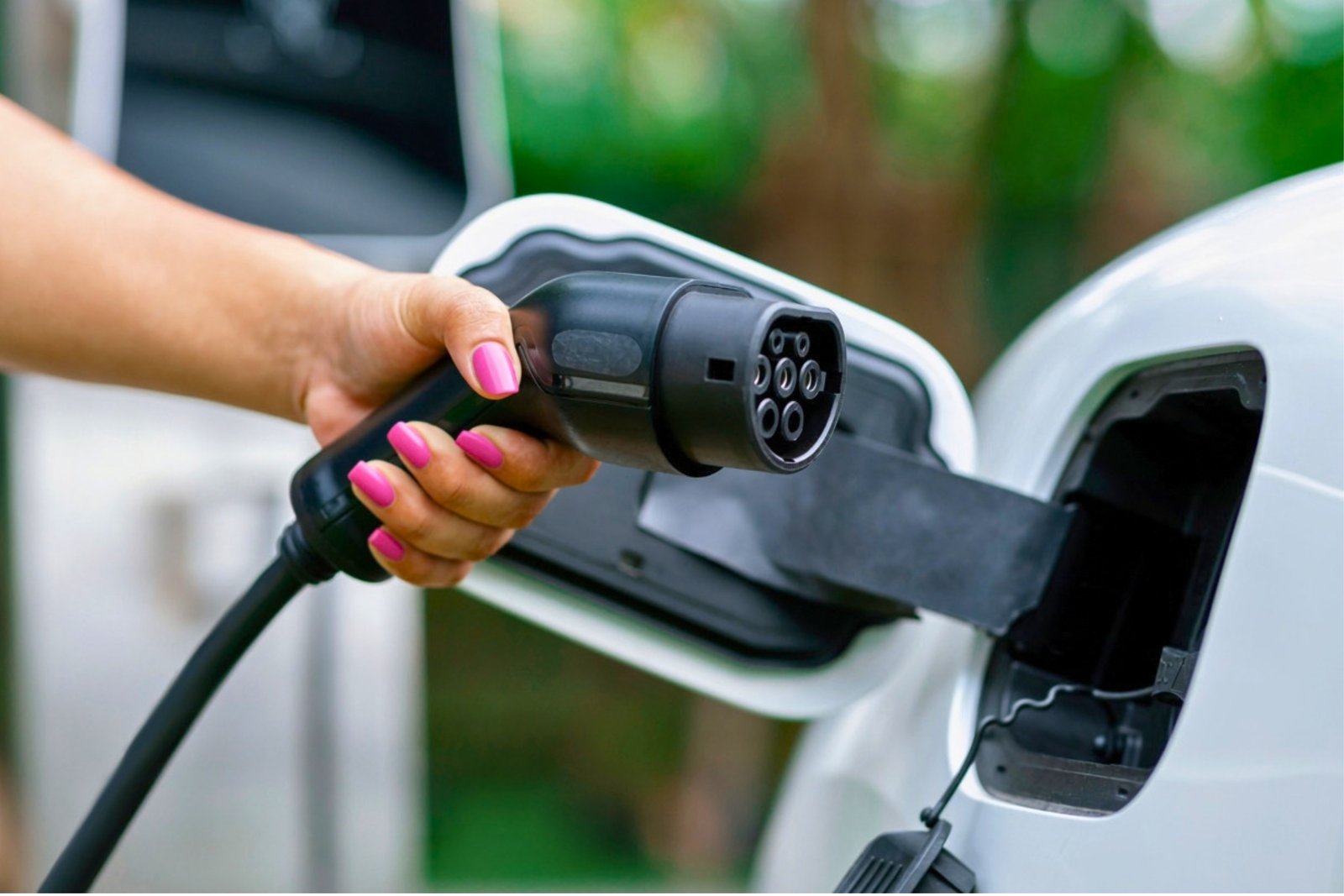
When we got our electric car three years ago, I thought we were simply getting a different kind of car.
I was wrong.
The car itself? Fantastic. We have a Volvo EV, and I absolutely love driving it. It is quiet, comfortable, loaded with great features, requires much less maintenance, and — let’s be honest — the acceleration is ridiculously fun. There is no oil change to remember, no traditional engine maintenance, and the car feels incredibly smooth.
But owning an electric car comes with something nobody really explained to me before we bought it:
You don’t just change your car. You change your routine.
With a gas-powered car, you generally don’t think much about where you will refuel. You see a gas station, stop, fill up, and continue.
With an EV, charging becomes part of your planning.
And eventually, you realize that your car isn’t just transportation anymore. It becomes part of your lifestyle.
You Start Planning Around Charging
With an EV, you begin asking questions you probably never asked before:
How far are we going?
How much charge do we have?
Where are we going to charge?
Is there a charger along the way?
Is it a fast charger or a slow charger?
How long will we be there?
Will the charger actually work?
And perhaps the most important question:
Will the charger be compatible with my car?
That last one can become surprisingly complicated.
Different car manufacturers and charging networks don’t necessarily make the experience simple. Tesla, for example, has its own Supercharger network, although access for non-Tesla vehicles depends on location, compatibility and current arrangements. Some charging situations may also require the appropriate adapter.
So before a long trip, you don’t simply look at the destination.
You start looking at the charging map.
And Then Come the Apps
This was one of the biggest surprises for me.
There isn’t one universal charging app that magically handles everything.
Instead, you can end up with an entire collection of charging-network apps on your phone.
One charger uses one app. Another uses something else. Another wants you to create an account. Another requires a password. Another may require a different payment method.
And if you’re traveling internationally, things can become even more interesting.
We learned that the hard way.
Our Canada Charging Adventure
When we drove to Canada for the first time, we discovered that some fast-charging apps weren’t accepting our U.S. cards.
Suddenly, having an electric car became less about driving and more about figuring out how to charge it.
And we were not exactly surrounded by options.
It was late. We were somewhere that felt like the middle of nowhere, and we weren’t sure what we were going to do.
Then we met a guy who had the local charging app.
He helped us use his account, and we offered him cash.
Honestly, that guy saved us.
It was one of those travel moments where a stranger unexpectedly becomes the most important person you’ve met that day.
And it taught us a lesson:
When you travel with an EV, don’t assume that the charging infrastructure will work exactly the way it does at home.
Especially when crossing borders.
Make sure you know which apps you’ll need, how you’ll pay, and that you can actually access the charging network before you need it.
And please remember your passwords.
You don’t want to discover that you forgot your charging-app password when you’re sitting in a parking lot with 8% battery.
The Mileage on the Screen Isn’t Always the Mileage You Actually Have
This is probably the part that took me the longest to get used to.
Your EV might tell you that you have, say, 200 miles of range.
But don’t think of that number as a promise.
Think of it as an estimate.
Temperature can make a significant difference.
On very hot or very cold days, the battery has other priorities. It doesn’t only have to move the car. It may need energy to heat or cool the battery and keep it operating properly.
In other words, your battery has its own little survival program.
It needs to take care of itself, too. :))
So that beautiful number on the dashboard can drop faster than you expected.
And that’s when you learn another EV habit:
You don’t wait until you’re almost empty to start thinking about charging.
Road Trips Require More Planning
This doesn’t mean you can’t take long trips with an electric car.
You absolutely can.
But you have to plan differently.
Before a long drive, I look at the route and think about where we can charge. I pay attention to fast chargers versus slower chargers. I consider how much range we should have when we arrive and whether there are alternative charging stations nearby.
Because there is a big difference between:
“There’s a charger somewhere along the route.”
and:
“There’s a working fast charger that my car can use, I have the correct app, my payment method works, and I have enough battery to get there.”
The second one is what you want.
Fast Charger vs. Slow Charger: It Matters
Not all charging stops are created equal.
A fast charger can make a road trip much easier because you’re trying to get back on the road quickly.
A slower charger can be perfectly fine when you’re staying somewhere for a few hours — having dinner, shopping, visiting friends or spending the night.
That’s another lifestyle adjustment.
You start thinking about what you’re doing while the car charges.
Sometimes charging is an inconvenience.
Sometimes it’s actually convenient.
If we’re having lunch anyway, plugging in the car doesn’t feel like a big deal.
If we’re trying to get somewhere quickly and the only available charger is slow, that’s a different story.
But I Still Love the Car
After everything I’ve just said, you might think I’m unhappy with our EV.
Quite the opposite.
I love it.
The driving experience is fantastic. It’s quiet, incredibly responsive and unbelievably quick when you hit the accelerator.
There are fewer traditional maintenance chores, no regular oil changes, and the technology inside the car is impressive.
For everyday driving, an EV can be wonderful.
The challenge isn’t really the car.
It’s learning the new ecosystem around the car.
An EV Changes Your Habits
After three years, we’ve learned that owning an electric car means thinking a little differently.
You charge when it makes sense.
You pay attention to the weather.
You think about the distance you’re traveling.
You check charging locations before a long trip.
You keep the necessary apps on your phone.
You make sure your passwords work.
And if you’re traveling somewhere new — especially across a border — you do your homework before you leave.
It sounds like a lot.
But eventually, it becomes second nature.
Just like we once learned where the cheapest gas stations were, we learn where the reliable fast chargers are.
And just like we used to notice the gas gauge, we learn to read the EV’s range differently.
So, Is an Electric Car Worth It?
For me, yes.
But I think people should understand what they’re really buying.
You’re not simply replacing a gasoline-powered car with an electric one.
You’re adopting a different way of using a car.
An EV asks you to be a little more organized, a little more aware of your route, and a little more prepared.
In return, you get a wonderfully quiet driving experience, impressive technology, lower routine maintenance and that instant electric acceleration that never gets old.
After three years, I’ve learned one thing:
An electric car isn’t just a car. It’s a lifestyle — and once you adjust to it, you may wonder why you ever thought about driving any other way.