
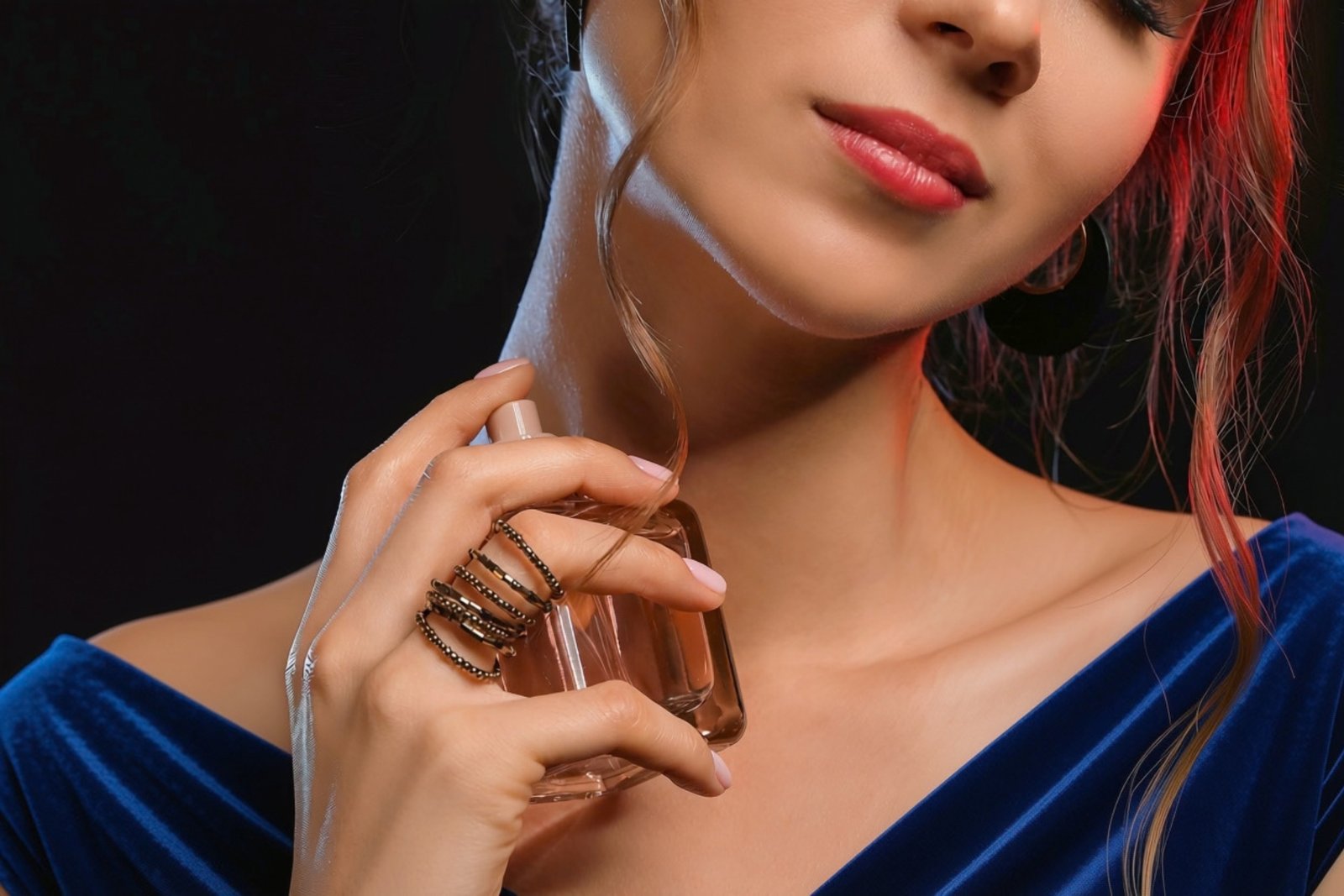
Most of us have one. An old favorite perfume we still miss, even years after we stopped wearing it. Maybe you find an old bottle at the back of a drawer, catch the scent somewhere, or simply think about it out of nowhere—and suddenly, you remember exactly how it used to make you feel.
Maybe it was the perfume you wore when you were younger, when you were dating, starting a career, traveling, or simply figuring out who you were. And somehow, that little bottle holds more than a fragrance. It holds a piece of your life.
That is the strange and wonderful thing about perfume. A scent can bring back a person, a place, or an entire chapter of your life faster than almost anything else.
And perhaps that’s why we’re so drawn to old fragrances. Sometimes we’re not just looking for the perfume we used to love. We’re looking for a feeling we remember.
The perfume wasn’t the memory. You were.
We tend to think we remember a perfume because we remember its notes—rose, vanilla, jasmine, sandalwood, citrus.
But memory doesn’t work quite that neatly.
A fragrance becomes connected to whatever was happening around us when we wore it. The same perfume can remind one person of a first apartment and another of her mother, a holiday, a wedding, or a particular decade of her life.
That is why smelling an old fragrance can feel almost startling.
For a moment, you aren’t simply smelling perfume.
You’re remembering yourself.
And sometimes, what we miss isn’t even the perfume itself. It’s the woman who wore it.
Why old perfumes can smell different today
This is where things get interesting.
If you return to a perfume you loved years ago and think, This isn’t how I remember it, you may not be imagining things.
Perfumes can change over the years. Regulations surrounding fragrance ingredients evolve, some natural materials become harder to source, and certain ingredients may be restricted or replaced. Perfume houses may then adjust a formula while trying to preserve the character of the original.
Even small changes can affect the way a fragrance develops on skin.
And there is another possibility: your memory has changed too.
We don’t necessarily remember a scent with perfect accuracy. We remember the experience surrounding it—the mood, the person, the place, the feeling.
So when you smell an old favorite decades later, you’re comparing today’s perfume with both an earlier formula and an earlier version of yourself.
That’s an impossible comparison to win.
The return of the perfume wardrobe
Perhaps this explains why fragrance nostalgia feels especially appealing now.
For years, perfume culture has encouraged us to constantly search for the newest thing: the next viral bottle, the next “signature scent,” the next fragrance everyone is talking about.
But there is something lovely about going back.
A perfume you’ve known for years doesn’t need to introduce itself. You already know where it belongs.
And today’s nostalgia isn’t limited to people who actually lived through the decade being referenced. Younger fragrance lovers are also discovering older scent profiles, vintage bottles and retro-inspired perfumes, drawn to the sense of character and history they provide.
The appeal isn’t simply that the bottle is old.
It feels personal.
What made those older perfumes feel different?
If you remember perfumes from the 1980s, 1990s or early 2000s, you may notice that many had a stronger personality.
Some were unmistakably floral. Others were powdery, woody, green, spicy, musky or unapologetically sweet.
They weren’t always designed to disappear quietly into the background.
And that is part of their charm.
Modern fragrance has enormous variety, but there is something satisfying about a perfume that doesn’t try to be everything at once.
You might smell it and immediately know what kind of perfume it is.
That clarity is increasingly appealing in a world of endless choices.
What to look for if you want that feeling again
You don’t necessarily need to find an untouched bottle from 1994.
In fact, buying an old bottle can be risky. Fragrance changes with age and storage, and a vintage bottle isn’t automatically going to smell better simply because it is older.
Instead, start with the character of the perfume you remember.
If you remember something elegant and powdery
Look for iris, violet, rose, soft musk, heliotrope or powdery woods.
These notes can create that polished, dressed-up feeling associated with many classic fragrances.
If you remember something fresh and clean
Look for citrus, green notes, neroli, aldehydes, aquatic notes or light woods.
This is the territory of perfumes that feel like freshly washed hair, a white shirt and an open window.
If you remember something warm and sensual
Look for amber, vanilla, sandalwood, musk, tonka bean or soft spices.
These compositions tend to feel more enveloping—and are particularly beautiful in cooler weather.
If you remember something unmistakably feminine
Look toward rose, jasmine, tuberose, orange blossom, gardenia or a classic floral bouquet.
The trick is not to look for the exact perfume immediately.
Look for the scent family that made you love it in the first place.
Read the bottle differently
When revisiting an old perfume, don’t begin with the question:
“Does this smell exactly like it used to?”
Try:
“What did I love about this?”
Was it the softness?
The confidence?
The freshness?
The drama?
The way it lingered on a scarf?
The way someone always knew you had arrived?
Those details are more useful than simply remembering the name.
Once you identify the quality you miss, you can find it in a current fragrance—even if the original has been discontinued or reformulated.
And don’t underestimate the bottle
Part of fragrance nostalgia is visual.
The bottle sitting on a dressing table becomes part of the memory too.
A particular cap. A heavy glass bottle. A ribbon. A gold label. The shape of the atomizer.
Older perfume bottles often have a distinct sense of occasion about them. They look like objects you keep rather than products you finish.
That matters because perfume has always been partly about ritual.
You aren’t simply spraying something on your wrist.
You’re getting ready.
Maybe we don’t actually want our old perfume back
This might be the most interesting part.
Sometimes we search for an old fragrance because we want to recreate a moment.
But moments don’t come back.
And neither does the person who wore the perfume then.
That’s not necessarily sad.
It can actually make revisiting fragrance more interesting.
You can remember the old version of yourself while choosing something that belongs to the woman you are now.
Maybe you still love that rose perfume—but now you want more woods.
Maybe the sweet vanilla that once felt glamorous now feels too young, but an amber fragrance gives you the same warmth with more depth.
Maybe you discover that what you really loved wasn’t the perfume at all.
It was the confidence you felt when you wore it.
And fortunately, confidence is one thing you can bring with you.
The new rule for finding your signature scent
Forget the idea that you need one perfume forever.
Your fragrance can change as your life changes.
You can have the perfume for a summer morning, the one for dinner, the one that reminds you of travel, and the one you wear when you simply want to feel like yourself.
Think of fragrance as a wardrobe rather than a permanent identity.
Because the best perfume isn’t necessarily the most expensive, the most popular, or the most complicated.
It’s the one that makes you stop for half a second after you spray it and think:
Yes. That’s me.