
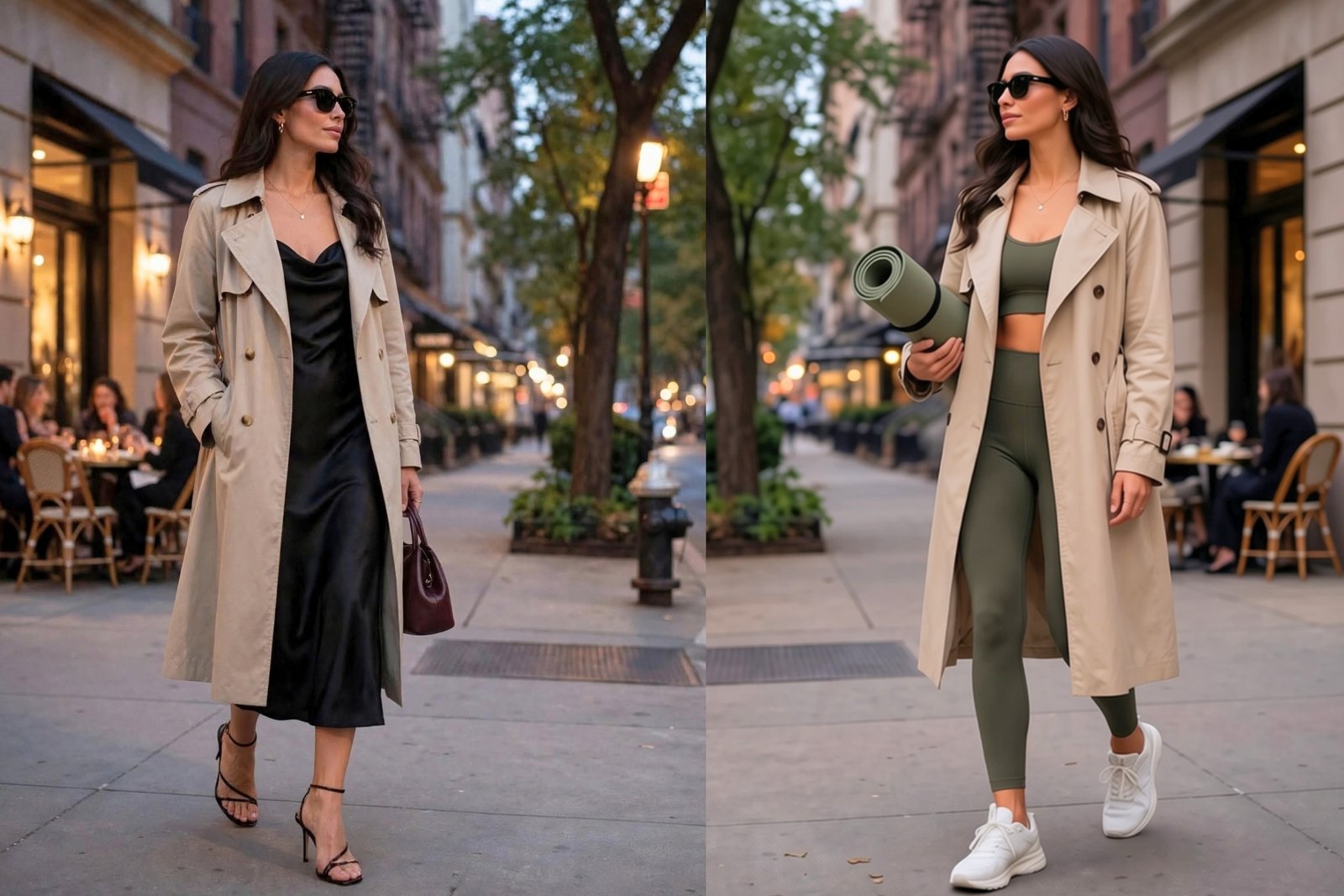
Fashion used to divide our closets into very specific categories.
Work clothes. Weekend clothes. Workout clothes. Vacation clothes. Going-out clothes. Clothes you wore only when you wanted to look particularly polished.
That system made sense when our lives were more predictable.
Today, not so much.
You might answer emails from home in the morning, run errands at lunch, meet a friend for coffee, go to dinner in the evening—and perhaps squeeze in a workout somewhere in between. You may work in an office two days a week, remotely the rest of the time, and travel frequently enough that your suitcase has become an extension of your closet.
Enter the hybrid wardrobe.
And despite the trendy name, the idea is remarkably practical: your clothes should be able to move with you through different parts of your day.
What Exactly Is a Hybrid Wardrobe?
A hybrid wardrobe is built around pieces that can cross boundaries.
Instead of buying something specifically for the office, something else specifically for weekends, and another outfit for travel, you choose clothes that can be styled differently depending on where you’re going.
Think:
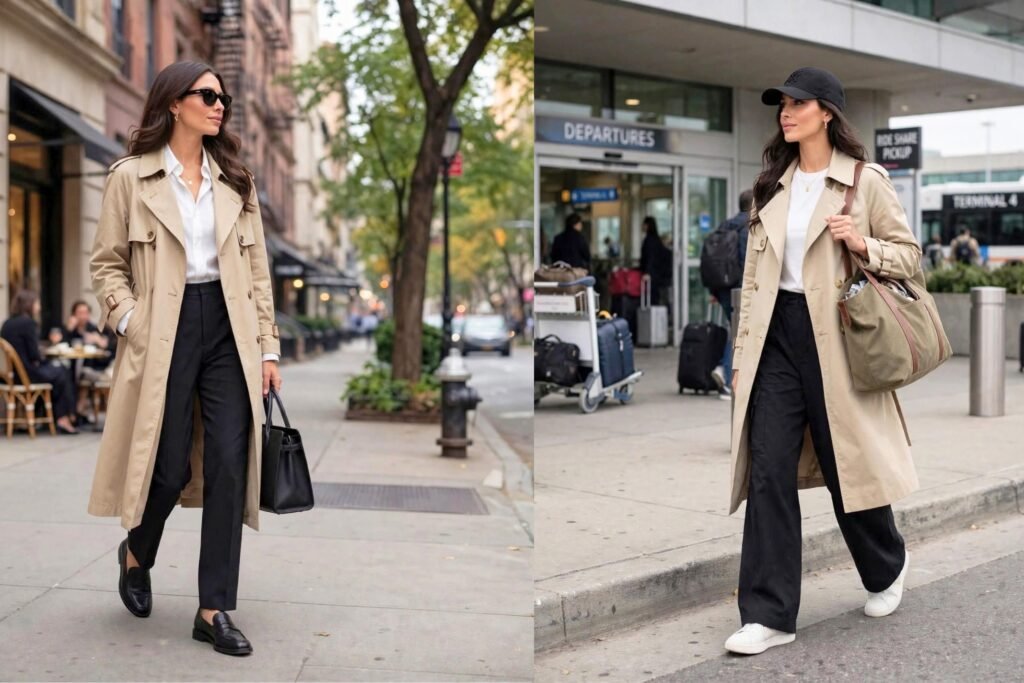
- Tailored trousers with sneakers and a sweater
- A simple dress with loafers for work and sandals for dinner
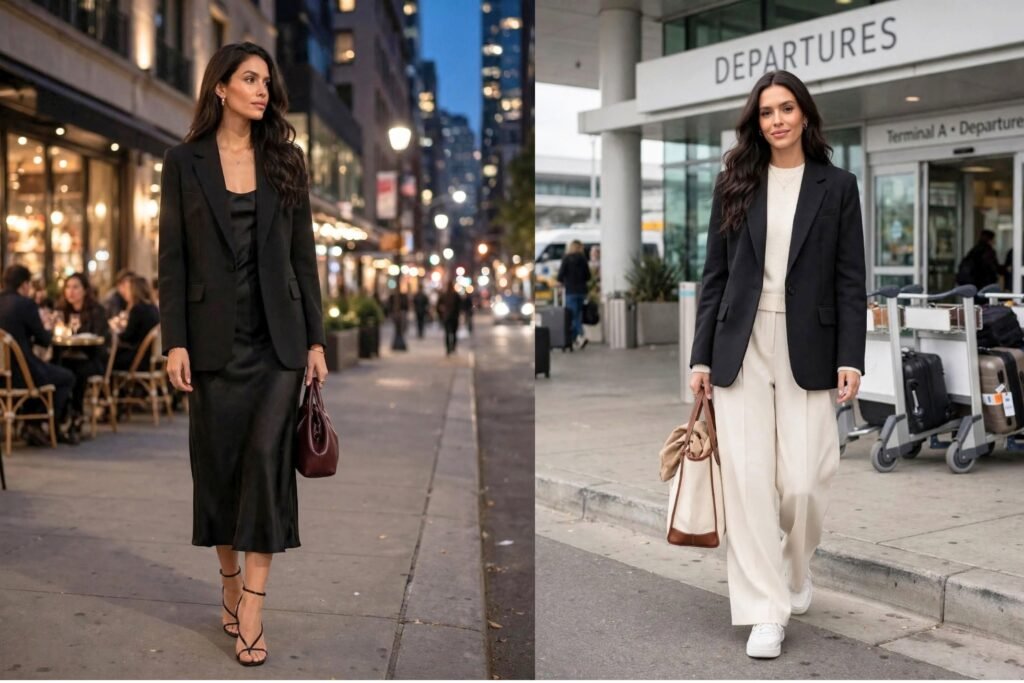
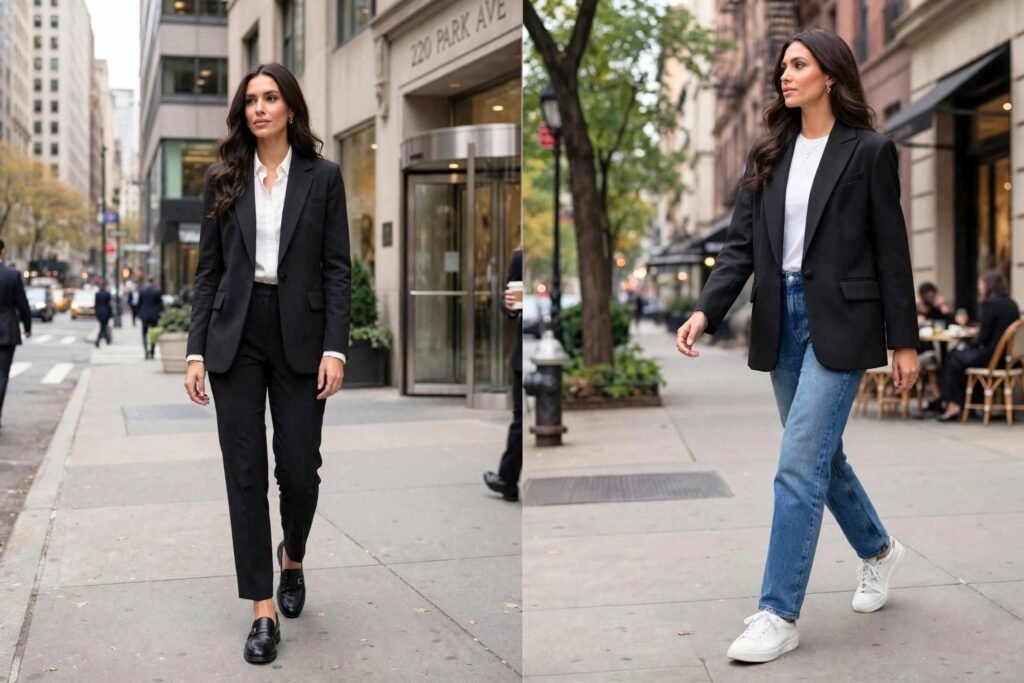
- A blazer over jeans during the weekend
- A polished knit set for travel, errands or casual meetings
- A silk or satin skirt with a simple T-shirt and sneakers
- A technical or sporty jacket over a more refined outfit
- Wide-leg trousers that work with a blouse, sweater or simple tank
The goal isn’t to make every outfit appropriate for every situation.
It’s to make more of your wardrobe useful more often.
That distinction is important.
Why Did the Hybrid Wardrobe Start?
The phrase became particularly associated with the post-pandemic workplace.
As people returned to offices after spending months working from home, the old distinction between professional and casual clothing had already started to disappear.
A 2021 Washington Post report described the emergence of “hybrid dressing” as workwear, evening wear and leisurewear increasingly overlapping. Relaxed dress codes, comfortable fabrics and sneakers became much more acceptable in workplaces.
By 2022, the idea of a “hybrid wardrobe” was being used to describe something broader: people deliberately buying clothes that could work both at work and away from work. Fortune reported that consumers were looking for pieces that could be worn across different parts of their lives rather than maintaining completely separate wardrobes.
But the pandemic didn’t create the idea from nothing.
It accelerated a much longer movement toward casualization.
Corporate dress codes had already been loosening for decades, particularly as technology companies and creative industries moved away from traditional suits and formal officewear. The pandemic simply pushed that change much faster.
Then came another factor: people became more conscious of what they actually wear.
Why own a beautiful pair of trousers that comes out of the closet twice a month when another pair can work for the office, travel, dinner and Sunday brunch?
And Now Hybrid Dressing Is Becoming a Fashion Trend
This is where the idea gets more interesting.
In 2026, hybrid dressing isn’t limited to work-from-home life.
Fashion retailers are increasingly describing a mix of functional clothing and more polished fashion as hybrid dressing.
Current examples include technical sneakers with tailored outfits, track pants with blazers, hiking-inspired boots under sophisticated coats and utility jackets over feminine dresses. The appeal is the contrast between practicality and polish.
At the same time, designers are experimenting with garments that can literally transform or be worn multiple ways. Reversible pieces, adjustable necklines, detachable sleeves and garments that change shape are becoming part of the broader conversation around getting more mileage from clothing.
So the hybrid wardrobe is moving from “I need clothes that work for my hybrid job” to something much bigger:
“I want my wardrobe to work for my actual life.”
Is It Actually Practical?
Very.
In fact, practicality may be the biggest reason this trend has staying power.
A hybrid wardrobe can mean:
Less overpacking.
One pair of trousers that works for sightseeing and dinner is more useful than packing three different bottoms.
Less closet clutter.
If an item only works for one very specific occasion, it has to justify taking up valuable closet space.
More outfit combinations.
A blazer isn’t just a work blazer. It can change jeans, a dress, trousers or even a simple T-shirt.
More comfortable dressing.
You don’t necessarily have to choose between looking polished and feeling comfortable.
More intentional shopping.
Instead of asking, “Do I like this?” you start asking, “How many ways will I actually wear this?”
That last question is probably the most useful.
How to Build a Hybrid Wardrobe
You don’t need to throw out your closet and start again.
Start with the clothes you already wear.
1. Find Your “Bridge” Pieces
These are the pieces that connect different parts of your life.
Good examples include:
- Straight or wide-leg trousers
- Dark or clean-cut jeans
- Blazers
- Fine-gauge sweaters
- Simple dresses
- Elevated T-shirts
- Loafers
- Minimal sneakers
- Ankle boots
- Structured handbags
- Lightweight jackets
These pieces don’t scream “office,” “gym” or “vacation.”
That’s exactly why they work.
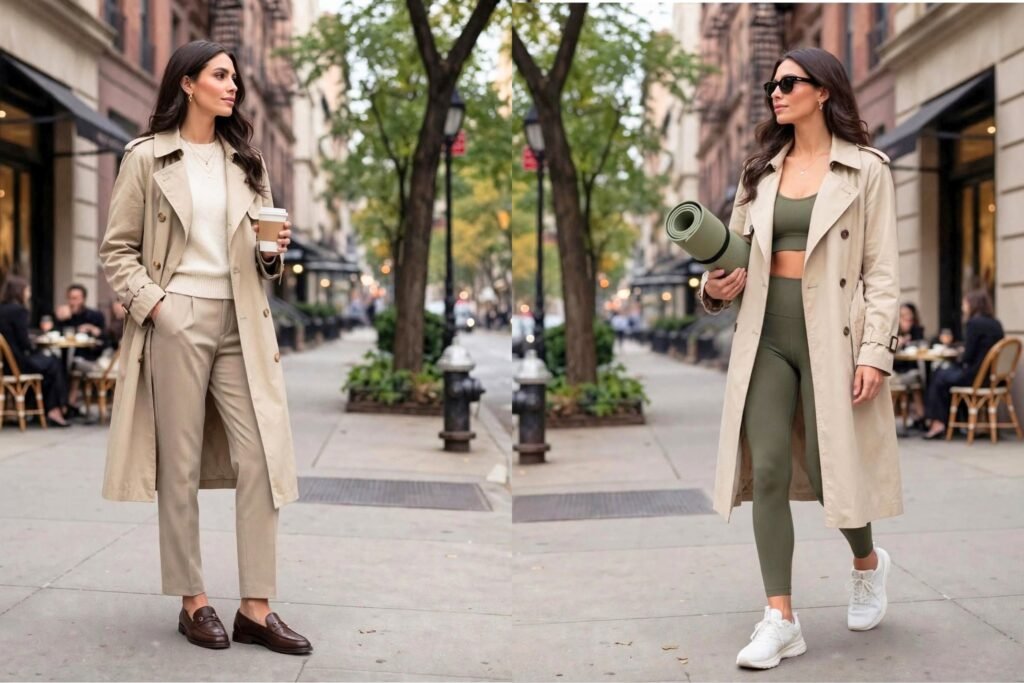
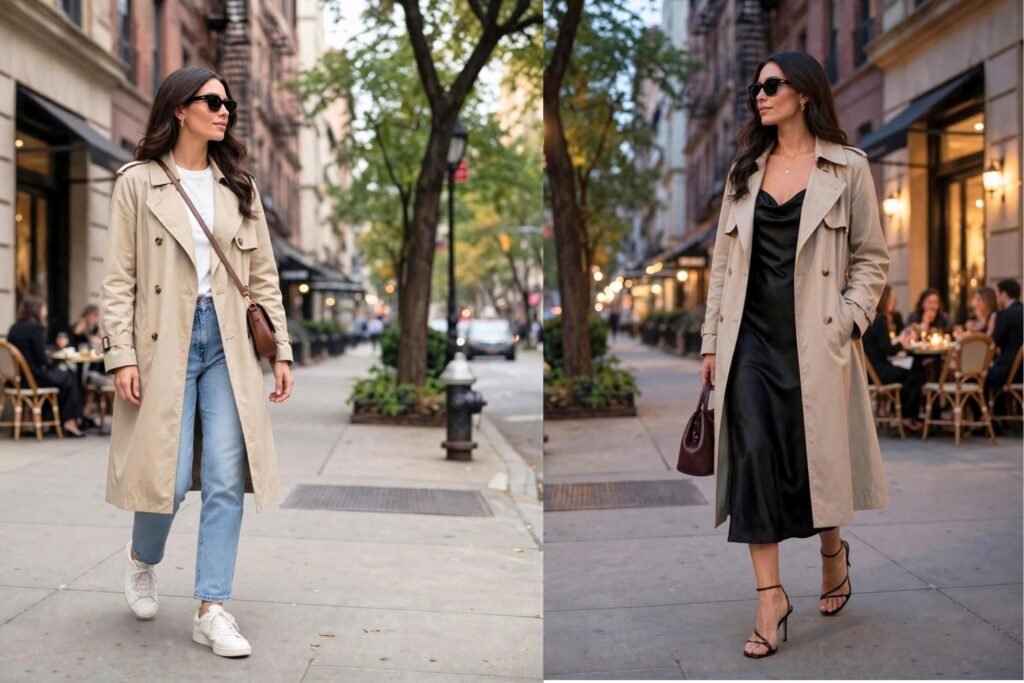
2. Mix One Practical Piece With One Polished Piece
This is probably the easiest way to try the trend.
Try:
Technical jacket + tailored trousers
Sneakers + a sophisticated coat
Track pants + blazer
Feminine dress + utility jacket
Jeans + silk blouse
Sweater + satin skirt
Hiking-inspired boots + elegant wool coat
The contrast keeps the outfit from looking like you accidentally got dressed for two completely different occasions.
3. Change the Accessories, Not the Entire Outfit
This is one of my favorite things about the hybrid wardrobe.
The same simple dress can become:
Day: sneakers + crossbody bag
Work: loafers + structured tote + blazer
Dinner: heels or elegant sandals + jewelry + smaller handbag
You haven’t changed the dress.
You’ve changed the message.
4. Make Travel Your Testing Ground
Travel is where hybrid wardrobes make the most sense.
Instead of packing an outfit for every possible activity, think in layers.
A good travel combination might be:
Wide-leg trousers + fitted top + cardigan + sneakers + blazer
Wear the sneakers and trousers on the plane.
Add the blazer for dinner.
Swap the cardigan for a lightweight jacket during sightseeing.
Change the sneakers to sandals or loafers when you want something dressier.
Suddenly one basic outfit has several lives.
The Secret: Don’t Make Everything “Versatile”
There is a trap here.
If you become obsessed with buying only clothes that can supposedly be worn 15 different ways, your wardrobe can become extremely practical—and extremely boring.
You still need clothes that are simply beautiful.
You still need the dress that makes you feel fabulous.
You still need the dramatic earrings, the beautiful coat, the vacation dress or the shoes you bought because you couldn’t stop thinking about them.
A hybrid wardrobe shouldn’t eliminate personality.
It should eliminate unnecessary separation.
Which Age Group Is Wearing the Hybrid Wardrobe?
There isn’t a single age group that owns this trend.
But different generations are arriving at it for somewhat different reasons.
Gen Z
For younger consumers, the boundaries between categories were already relatively fluid. Sneakers, oversized tailoring, athletic pieces, vintage clothing and traditionally formal items can all exist in the same outfit.
The appeal is often self-expression and flexibility rather than following traditional dress codes.
Millennials
Millennials were particularly affected by the transition from traditional office culture to hybrid work.
Many now want clothes that can move between professional life, social life and everyday activities without requiring a complete change of outfit.
A 2022 analysis specifically noted that millennials and Gen Z were among the groups for whom the distinction between work and leisure had become increasingly fluid.
Gen X and older consumers
The concept can be equally useful—and perhaps even more practical—for people who have accumulated multiple wardrobes over the years.
Instead of “office clothes” sitting untouched until Monday, a well-cut blazer, beautiful knit or comfortable trouser can become part of everyday dressing.
The hybrid wardrobe isn’t really an age trend.
It’s a lifestyle trend.
If your day involves more than one thing, it makes sense.
The Nuvovogue Way to Do It
You don’t need to suddenly start wearing track pants with heels.
The easiest way to embrace hybrid dressing is much simpler:
Take something comfortable and add something polished.
Jeans + blazer.
Sneakers + tailored trousers.
Sweater + satin skirt.
Simple dress + structured bag.
Utility jacket + elegant trousers.
Loafers + relaxed denim.
That little tension between casual and polished is what makes the outfit feel modern.
And perhaps that’s the real reason the hybrid wardrobe is catching on.
We’re not necessarily dressing for a single destination anymore.
We’re dressing for the day.
And our clothes need to keep up.