
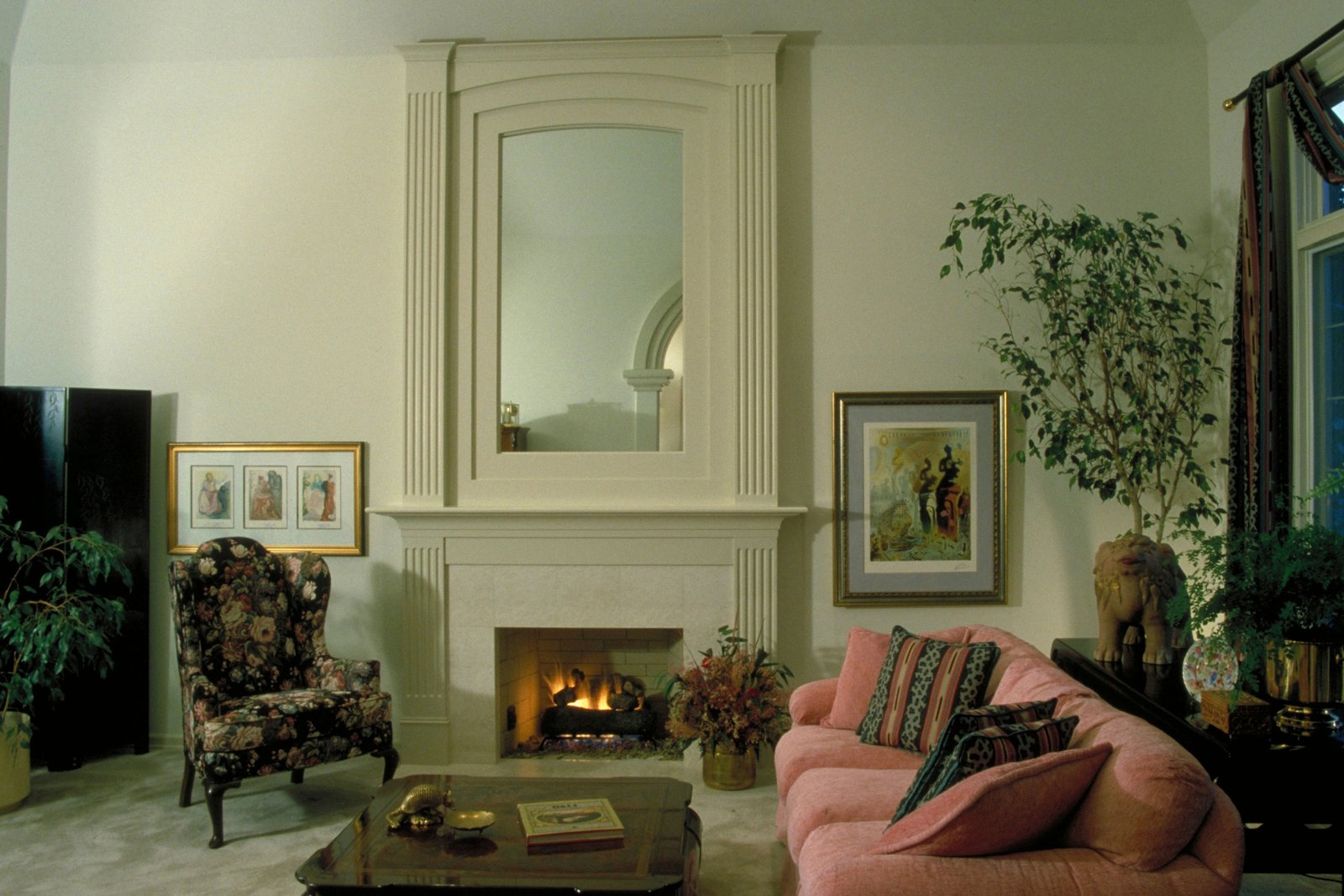
Mirrors have always had an obvious job in a home: check your reflection, make a room look bigger, or brighten a dark corner.
But this fall, reflective surfaces are becoming something more interesting.
Instead of simply hanging a mirror on the wall, designers are treating reflection as a design material — something that can change how we experience a room, manipulate light, and even blur the boundaries between spaces.
And the trend goes far beyond traditional mirrors.
Reflection Is Becoming Part of the Architecture
A reflective surface can make a room feel completely different without changing its footprint.
A bronze mirror placed between two rooms, for example, can soften the visual boundary between them. Instead of creating a hard dividing line, the reflection makes the transition feel almost seamless.
Smoked, tinted, or softly colored reflective glass can have a similar effect. Unlike a traditional clear mirror, these finishes don’t simply reflect everything sharply. They create a more atmospheric reflection and interact with natural and artificial light in a different way.
The result can feel sophisticated, slightly mysterious, and much more layered.
Look Up: The Mirrored Ceiling Is Back
One of the more dramatic ways to use reflection is above your head.
A mirrored or highly reflective ceiling can change our perception of height. Instead of seeing a solid ceiling as the visual endpoint of a room, the reflection creates the impression that the space continues beyond it.
You don’t necessarily need a completely mirrored ceiling to get the effect.
A high-gloss finish can create a softer version of the same idea, reflecting light without producing a strong mirror image.
This can be particularly interesting in smaller rooms, hallways, dining spaces, or areas where you want to create a feeling of openness.
You Don’t Need a Mirror to Create Reflection
This is where the trend gets especially interesting.
Reflection can come from high-gloss paint, lacquer, polished metals, glossy cabinetry, or other sleek surfaces.
A glossy wall doesn’t necessarily announce itself as a “reflective feature.” Instead, it catches changing light throughout the day.
Morning sunlight, a lamp in the evening, or even movement through the room can create subtle changes across the surface.
This makes a wall feel less static.
Try Gloss on the Ceiling
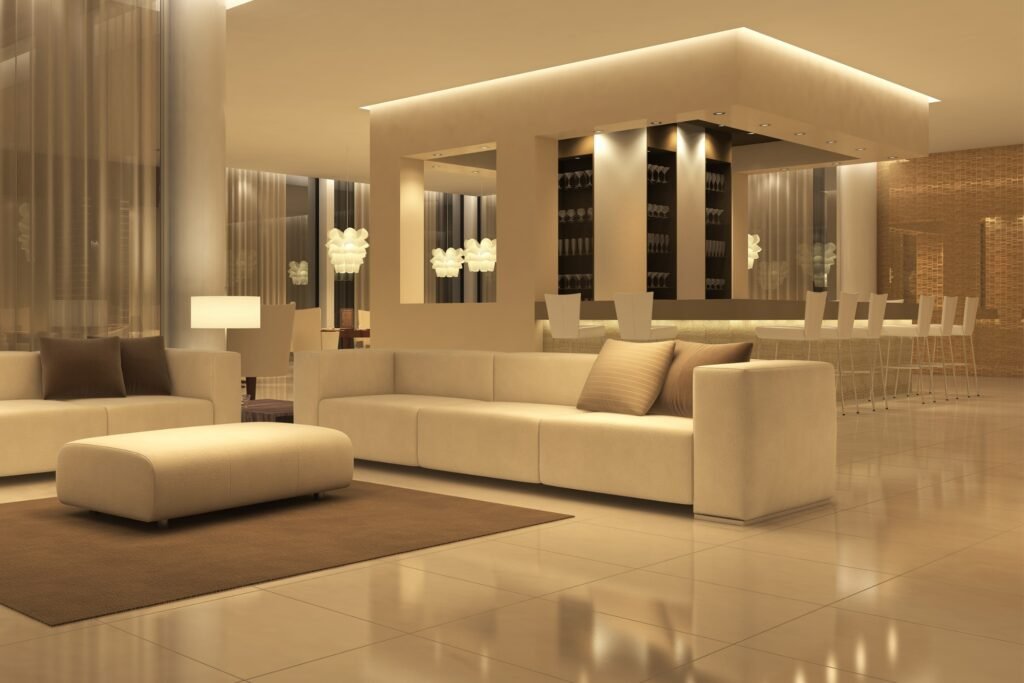
One simple way to experiment with the trend is to extend a glossy paint finish onto the ceiling.
Rather than stopping the finish at the walls, carrying it overhead can create a continuous visual surface and make an enclosed area feel more expansive.
It’s a particularly interesting idea for a small powder room, narrow hallway, or cozy dining space.
Bronze and Smoked Finishes Bring a Softer Reflection
If a traditional silver mirror feels too sharp or contemporary for your home, consider warmer alternatives.
Bronze mirrors can introduce warmth while still reflecting light.
Smoked mirrors create a darker, moodier effect.
Tinted reflective glass can introduce subtle color without becoming the main feature of the room.
These finishes work especially well when you want reflection without the unmistakable look of a standard bathroom mirror.
The Secret: Don’t Make Everything Shiny
There is one important rule with reflective surfaces: balance is everything.
Too many polished surfaces can make a room feel cold or overly sleek.
The most interesting interiors mix reflective materials with things that invite you to touch them.
Think:
- Warm timber
- Natural stone
- Linen
- Bouclé or soft upholstery
- Textured rugs
- Woven materials
- Matte ceramics
- Aged or natural finishes
The contrast is what makes the reflection feel intentional.
A glossy lacquered wall next to natural wood feels much richer than a room filled entirely with polished surfaces.
Reflection Can Make a Room Feel More Luxurious
There is also something inherently elegant about the way reflective materials interact with light.
A polished metallic table catches a small glow from a lamp.
A bronze mirror picks up the warmth of a sunset.
A glossy ceiling reflects a chandelier.
A lacquered wall changes subtly as daylight moves across it.
These details don’t necessarily scream for attention. Instead, they create movement and depth.
And that’s perhaps the most appealing part of the trend: the room itself becomes part of the decoration.
How to Try the Trend Without Redesigning Your Home
You don’t need to install a mirrored ceiling or replace an entire wall.
Start small.
Try a large bronze or smoked mirror leaning against a wall rather than hanging traditionally. Add a polished-metal side table beside a textured sofa. Choose a glossy console for an entryway. Experiment with lacquered cabinetry in a kitchen or bathroom.
Even a reflective tray, metallic lamp, or glossy decorative object can introduce the idea.
The goal isn’t to make your home look like a showroom.
It’s to let light, reflection, and texture become part of the design.
A Different Way to Think About Mirrors
The new reflection trend isn’t really about having more mirrors.
It’s about seeing reflective surfaces differently.
A mirror can become architectural. A ceiling can become an extension of the room. Paint can behave almost like glass. Metal can capture changing light.
Instead of simply asking, “Where should I put a mirror?”, the more interesting question might be:
“What could reflection do to this space?”
That small shift in thinking can open up an entirely new approach to home design — one that feels polished, modern, and surprisingly subtle.