

A road trip should be about the places you discover, the music you play along the way, and the freedom of taking the scenic route—not worrying about what could go wrong.
Whether you’re planning a weekend getaway, a long-distance drive, or a summer trip with family, a little preparation can make the journey considerably more comfortable and safer. The key is to think beyond the obvious packing list and prepare for the unexpected.
Here are the road-trip safety essentials worth having before you pull out of the driveway.
1. Start With Your Car
Before loading the trunk, give your car a quick safety check.
Check your tire pressure, including the spare, and look at the condition of the tires. Make sure your headlights, brake lights, turn signals, windshield wipers, and fluid levels are all in good shape.
If you’re traveling a long distance, it’s also worth checking your oil and making sure your vehicle’s scheduled maintenance is up to date.
A five-minute inspection at home is much easier than discovering a problem halfway through your trip.
2. Keep an Emergency Kit in the Car
Even if you don’t expect to need it, an emergency kit is one of those things you will be very glad to have when something unexpected happens.
Consider keeping:
- A first-aid kit
- Flashlight and extra batteries
- Phone charging cable and portable power bank
- Jumper cables or a portable jump starter
- Reflective warning triangles or roadside markers
- Basic tools
- Tire pressure gauge
- Tire inflator
- Blankets
- Bottled water
- Nonperishable snacks
- Work gloves
- Emergency contact information
You don’t need to turn your trunk into a survival station. The goal is simply to have the basics within reach if you experience a breakdown or unexpected delay.
3. Consider a Dash Cam
A dash cam isn’t just another gadget for your car. For frequent travelers, it can be a practical piece of safety equipment.
A dash cam continuously records the road, providing a record of what happened if you are involved in an accident or encounter an unexpected incident. Some models also offer features such as parking monitoring, GPS information, Wi-Fi connectivity, and front-and-rear recording.
For a road-trip setup, front-and-rear recording can be particularly useful, since you’re documenting more than what’s happening directly in front of the vehicle.
One option worth considering is REXING. Its V1P 4K Dual Channel Dash Cam records in 4K from the front and 1080p from the rear, with Wi-Fi, a wide-angle lens, loop recording, and a G-sensor that can lock footage when it detects a collision. The model also supports an optional GPS logger and parking monitoring with the appropriate hardwire kit.
Nuvovogue road-trip pick: A dual-channel dash cam is worth considering if you’re planning frequent road trips or simply want an extra layer of documentation while driving.
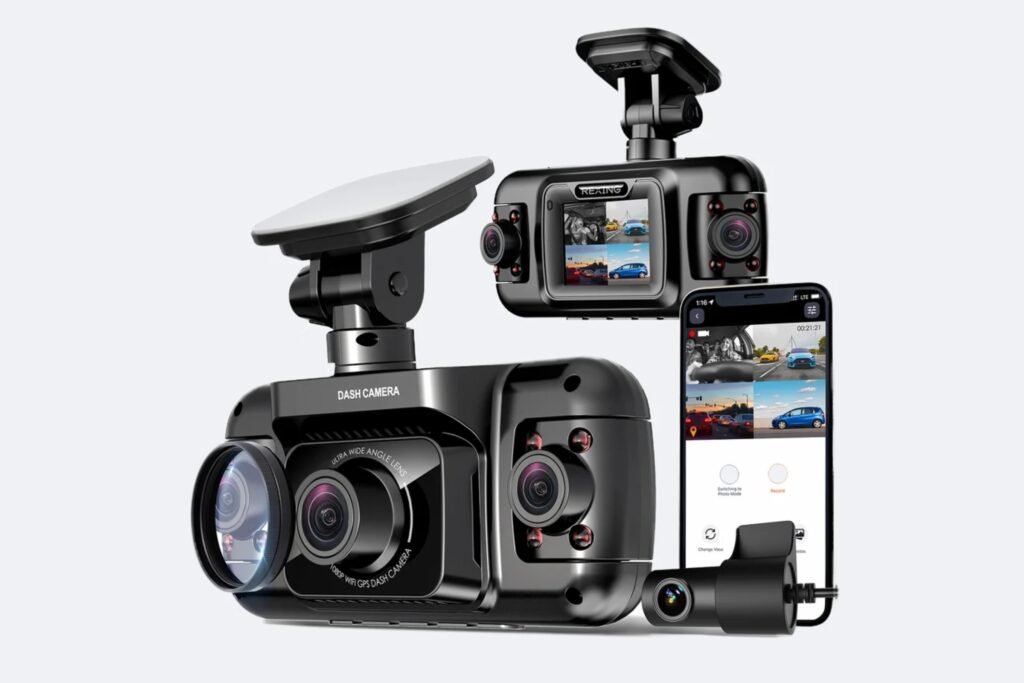
A Smart Addition for Long Road Trips
A dash cam can provide useful video documentation during your journey and add an extra layer of peace of mind on the road.
Affiliate disclosure: Some links on Nuvovogue are affiliate links. If you purchase through one of these links, we may receive a commission at no additional cost to you.
4. Don’t Forget Your Phone—But Don’t Depend on It Alone
Your smartphone can handle navigation, emergency calls, reservations, and roadside assistance, but it shouldn’t be your only backup.
Download maps for areas where cellular service may be unreliable. Keep a charging cable in the car and bring a fully charged power bank.
It’s also smart to save important addresses and phone numbers before you leave. If your phone battery dies or you lose service, having essential information available elsewhere can save you considerable frustration.
5. Pack a Real Navigation Backup
GPS is incredibly convenient, but technology isn’t infallible.
For longer or more remote trips, consider keeping a physical map in the car. You probably won’t need it—but if your phone loses reception or your navigation app stops cooperating, you’ll have another way to understand where you are and where you’re going.
The best road-trip technology is technology with a backup plan.
6. Keep Important Documents Accessible
Before leaving, make sure you have your driver’s license, registration, insurance information, and any other necessary documents.
If you’re traveling across state lines or internationally, check whether your destination has additional requirements.
Keep documents somewhere secure but easy to access when needed. Digital copies can also be useful as a backup.
7. Plan for Weather, Not Just the Destination
A sunny forecast at your starting point doesn’t necessarily mean you’ll have good weather throughout the drive.
Check the forecast along your route before leaving and again during longer journeys. Weather can change dramatically as you travel through different regions or elevations.
If severe weather is expected, reconsidering your departure time may be much smarter than trying to drive through it.
And remember: if conditions become unsafe, stopping is not failing to stick to the itinerary. It’s good road-trip planning.
8. Take Breaks Before You Need One
Fatigue can creep up on you, especially during long stretches of highway driving.
Don’t wait until you’re struggling to keep your eyes open before stopping. Build breaks into the itinerary and use them to stretch, get some fresh air, have something to eat, and reset.
If you’re traveling with another licensed driver, switching drivers can make a long journey considerably easier.
A road trip doesn’t have to be a race to the destination.
9. Keep Valuables Out of Sight
When you stop for lunch, sightseeing, or a quick coffee, avoid leaving expensive items visible inside the car.
Put bags, electronics, cameras, and other valuables in the trunk or another concealed location before arriving at your destination whenever possible.
It’s a small habit that can make your car less tempting to someone passing by.
10. Know What to Do If Something Goes Wrong
If you have a breakdown or accident, your first priority is safety.
Move the vehicle to a safe location if possible and turn on your hazard lights. If you cannot safely move the car, remain inside with your seat belt fastened when appropriate and call for assistance.
If you’re on a highway or busy road, be especially cautious when exiting the vehicle. Traffic can remain dangerous even when your own car has stopped.
Having roadside assistance information saved before the trip means you won’t have to search for it when you’re already stressed.
11. Make a Simple Pre-Trip Checklist
Before you leave, take five minutes to run through the basics:
CAR
- Tires checked
- Fluids checked
- Lights working
- Spare tire or tire-repair equipment ready
SAFETY
- First-aid kit
- Emergency supplies
- Flashlight
- Jumper cables or jump starter
TECH
- Phone fully charged
- Power bank
- Navigation ready
- Dash cam installed and recording
DOCUMENTS
- Driver’s license
- Registration
- Insurance
- Roadside assistance information
TRIP
- Weather checked
- Route reviewed
- Breaks planned
- Important reservations saved
It takes very little time, but it can make the beginning of your trip much less stressful.
The Road Trip Rule Worth Remembering
The best safety gear is the gear you actually prepare before you need it.
You don’t need to fill your car with gadgets or obsess over every possible problem. A well-maintained vehicle, basic emergency supplies, reliable navigation, and a few smart precautions go a long way.
And if you spend a lot of time behind the wheel, a dash cam can be a practical addition to your road-trip setup. REXING’s lineup includes everything from straightforward single-camera models to dual- and three-channel systems, allowing you to choose based on how much coverage you actually need.
Because the goal of a great road trip isn’t simply getting there.
It’s enjoying the journey—and getting home safely.