One is a heritage. The other is a philosophy.
If you’ve spent any time on fashion social media recently, you’ve almost certainly encountered both of these terms. Quiet luxury. Old money. They’re often used interchangeably, sometimes in the same sentence, frequently to describe the same outfit. And on the surface, it’s easy to see why — both aesthetics share a love of neutral palettes, quality fabrics, minimal logos, and a general sense of understated elegance.
But they’re not the same thing. And understanding the difference between them isn’t just an exercise in fashion pedantry — it actually changes how you approach building a wardrobe and, more broadly, how you think about style itself.
The Simplest Way to Understand the Difference
Here’s the clearest distinction, stated as plainly as possible:
Old money is a heritage. Quiet luxury is a philosophy.
Old money style is rooted in a specific cultural history — the aesthetic that emerges from generational wealth, Ivy League institutions, country estates, sailing clubs, and the particular codes of dressing that those environments produced over decades. It has references, traditions, and a very specific visual vocabulary.
Quiet luxury, on the other hand, is a contemporary design philosophy that anyone can adopt regardless of their background. It’s about choosing quality over quantity, restraint over excess, and timeless design over trend-driven pieces. It doesn’t require a heritage. It doesn’t require a specific wardrobe history. It just requires a certain set of values applied to how you dress.
They overlap significantly. But they’re not identical. And the differences, once you see them, are genuinely interesting.
What Old Money Style Actually Is
Old money style is deeply rooted in specific institutions and activities. Think New England prep schools. English country houses. European sailing regattas. Polo matches on summer afternoons. The clothes that emerged from these environments weren’t designed to be fashionable — they were designed to be appropriate, durable, and comfortable in specific contexts.
The result is a wardrobe with very particular DNA:
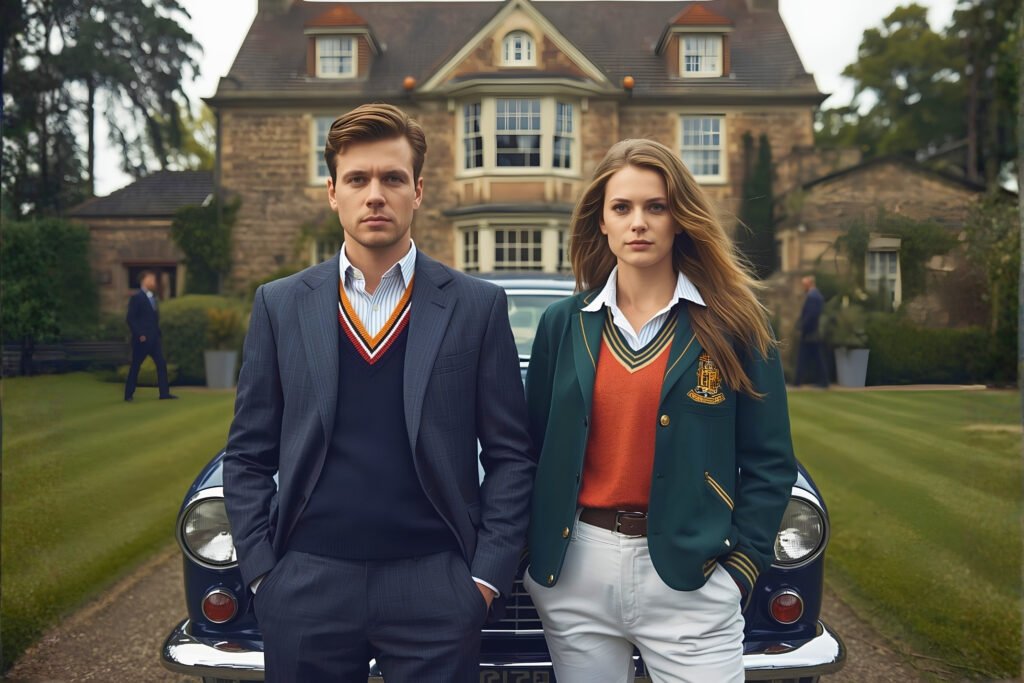
Collegiate and sporting references. Blazers with crests, varsity knits, rugby shirts, equestrian boots, sailing jackets, tennis whites. These pieces reference specific activities and institutions, and that specificity is part of what makes them feel so rooted and authentic.
Heritage brands. Old money style has genuine brand loyalties — not because of logos, but because of history and quality. Ralph Lauren, Brooks Brothers, Barbour, Hermès, Loro Piana, Lacoste. These brands are chosen because they’ve been trusted for decades, sometimes generations, not because they’re currently popular.
A patina of age. Perhaps the most defining characteristic of genuine old money style is that things look worn — in the best possible way. The leather bag that belonged to a parent. The blazer that’s been resoled twice. The watch passed down from a grandparent. Old money style carries history in its objects, and that history is visible and intentional.
Specific color signatures. Navy, hunter green, burgundy, camel, cream, racing green, tartan, subtle plaid. These colors and patterns carry specific cultural associations — they reference schools, sports, seasons, and social contexts that are very much part of the old money world.
A geographic and cultural rootedness. Old money style in New England looks slightly different from old money style in the English countryside, which looks different again from old money style on the French Riviera. But they share the same underlying values: quality, tradition, appropriateness, and a complete lack of interest in impressing strangers.
What Quiet Luxury Actually Is
Quiet luxury is newer as a named concept, though the values it embodies are ancient. It emerged as a cultural response to the maximalism and logo-heavy luxury that dominated the early 2000s — a pendulum swing toward restraint, quality, and understatement.
Where old money is rooted in heritage and tradition, quiet luxury is rooted in aesthetic philosophy. It’s not about where you came from or what institutions shaped you. It’s about a set of principles applied to how you dress and how you live.
Those principles look like this:
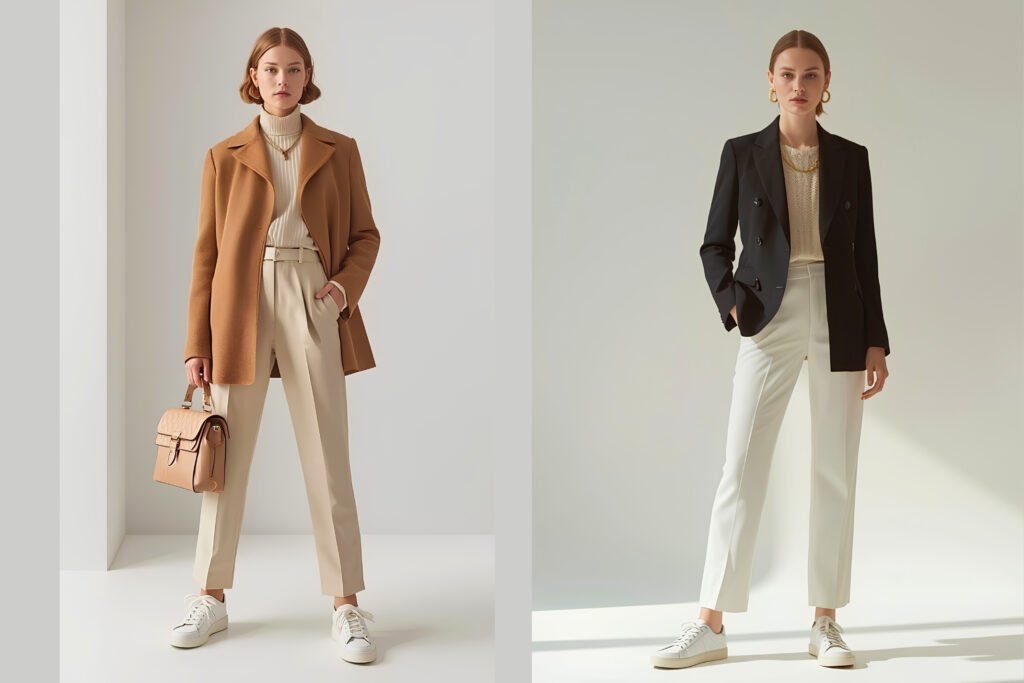
Neutrals as a foundation. The quiet luxury palette is even more restrained than old money — cream, camel, chocolate brown, ivory, soft gray, taupe, muted beige. These colors are chosen not because they reference a specific tradition but because they’re timeless, cohesive, and inherently sophisticated.
No logos, no exceptions. Quiet luxury is more absolute about this than old money. Old money style occasionally accommodates discreet heritage branding — a Barbour label, a Ralph Lauren polo pony. Quiet luxury tends to eliminate visible branding almost entirely. The clothes should speak for themselves through fabric and cut, full stop.
Fabric as the primary luxury signal. Cashmere, silk, fine merino, quality linen, substantial cotton — these materials are central to the quiet luxury aesthetic because they communicate quality in the most direct way possible: through touch and drape and appearance. When the fabric is genuinely beautiful, nothing else needs to work as hard.
Contemporary minimalism. Where old money style has a certain fussiness to it — the right collar, the right club tie, the right length of trouser — quiet luxury is cleaner and more minimal. The silhouettes are simple, the details are restrained, and nothing competes for attention.
Intentional buying. Quiet luxury is as much a consumption philosophy as it is an aesthetic. It’s about buying less and buying better, choosing pieces that will last rather than following seasonal trends, and building a wardrobe slowly and deliberately over time.
Where They Overlap
Despite their differences, quiet luxury and old money share enough common ground that the confusion between them is completely understandable.
Both reject logos. Neither aesthetic has any interest in visible branding. Both believe that quality should communicate itself without a name attached.
Both prioritize quality materials. Cashmere, leather, silk, fine wool — these are the fabrics both aesthetics reach for, because both understand that material quality is the foundation of a genuinely elevated wardrobe.
Both favor timeless over trendy. Neither old money nor quiet luxury has much patience for fast fashion or trend cycles. Both are building wardrobes meant to last years, not seasons.
Both communicate through restraint. The power of both aesthetics comes from what they don’t do — they don’t shout, they don’t perform, they don’t try to impress. That restraint is exactly what makes them both feel so genuinely sophisticated.
Both look expensive without necessarily being expensive. The principles of both aesthetics can be applied at almost any budget, because the principles are about choices — what to buy, what to wear, how to put things together — rather than price points.
Where They Diverge
Here’s where it gets interesting. The differences between old money and quiet luxury are subtle but meaningful, and they become clearest when you look at specific elements side by side.
The Color Palette
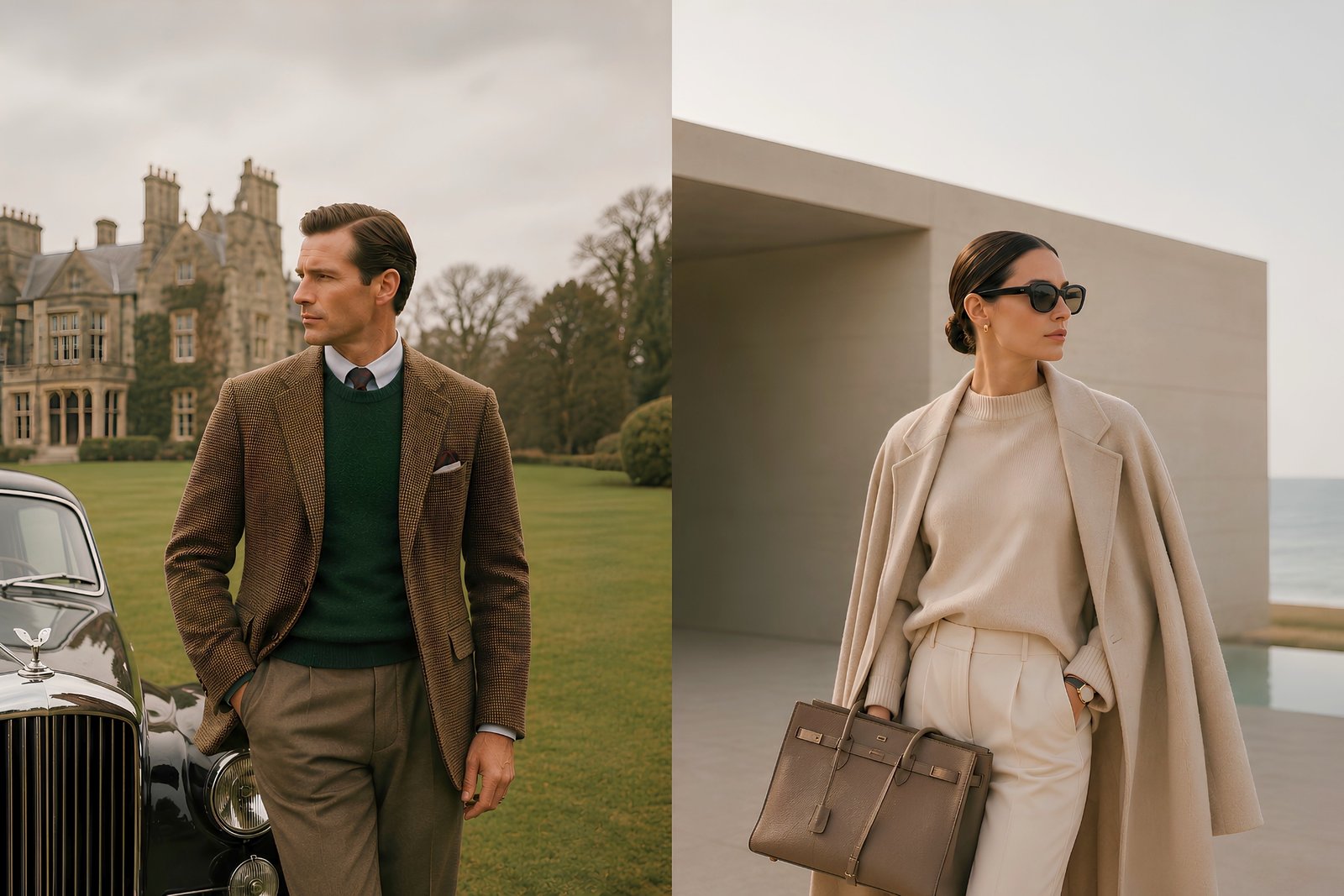
Old money reaches for navy, hunter green, burgundy, tartan, camel, and cream — colors with specific cultural and seasonal associations. There’s warmth and richness here, and occasional pattern.
Quiet luxury stays closer to a narrow band of neutrals — cream, camel, taupe, ivory, soft gray, chocolate brown. The palette is more restrained and more deliberately minimal. Pattern is rare.
The References
Old money is full of specific references — to institutions, sports, heritage brands, family history. The blazer with the crest. The Barbour jacket. The signet ring. These pieces mean something specific within a cultural context.
Quiet luxury is largely reference-free. It doesn’t nod to institutions or heritage. It’s simply about beautiful clothes, well-made and worn with intention. There’s no story required.
The Patina
Old money celebrates age and wear. Things that look used — the worn leather, the faded linen, the blazer with a history — are prized rather than replaced. The patina tells the story.
Quiet luxury tends toward pristine. The fabrics are beautiful and well-maintained, the silhouettes are clean, and everything looks considered rather than accumulated. It’s less about history and more about present-tense quality.
The Personality
Old money has personality — quirks, heritage pieces, family items, the occasional boldly patterned sock or unexpected accessory that signals confidence and ease. It’s not trying to be minimal. It’s trying to be appropriate, which is a different and more specific goal.
Quiet luxury is more deliberate and more controlled. Every element is considered. Nothing is accidental. It achieves its effect through precision rather than through accumulated character.
The Attitude
Old money is rooted in belonging. The clothes communicate membership in a specific world — not aggressively, not consciously even, but unmistakably. There’s a social dimension to it.
Quiet luxury is more individual. It’s not about belonging to a group or signaling membership in anything. It’s a personal philosophy about quality and restraint, applied to how one person chooses to dress and live.
Two Different Outfits, Same Occasion
To make this concrete, imagine two people walking into the same dinner party.
The old money person is wearing a navy blazer with subtle gold buttons, a crisp oxford shirt open at the collar, well-worn chinos in camel, and a pair of tan penny loafers that have clearly been resoled at least once. There’s a simple watch with a leather strap — possibly inherited. The blazer fits perfectly but has a slight softness to it from years of wear. The whole thing looks completely uncontrived, as if this person has been dressing this way for thirty years and has simply never thought about it very hard.
The quiet luxury person is wearing a perfectly fitted camel blazer in a beautiful wool blend, an ivory silk blouse with a simple neckline, tailored cream trousers with a precise break, and clean nude leather mules. The accessories are minimal — a thin gold bracelet, small stud earrings. Everything is immaculate and intentional. The palette is cohesive to the point of being almost tonal. The overall effect is one of considered, contemporary elegance.
Both outfits are genuinely beautiful. Both communicate sophistication and taste without any visible effort. But they communicate different things — one a sense of history and ease, the other a sense of precision and intention. One looks like it was inherited; the other looks like it was curated.
Neither is better. They’re just different expressions of the same underlying values.
Which One Is Right for You?
This is ultimately a question about which set of values resonates more deeply with your own sense of self.
If you’re drawn to old money style, you probably love the idea of clothes with history — pieces that age beautifully and tell stories. You’re drawn to heritage, tradition, and the specific cultural references of collegiate and sporting aesthetics. You enjoy the occasional pattern, the imperfect detail, the sense that your wardrobe was assembled over time rather than curated all at once.
If you’re drawn to quiet luxury, you probably respond more to minimalism and precision. You want a wardrobe that’s clean, cohesive, and deliberately composed. You’re less interested in cultural references and more interested in pure aesthetic quality — the best fabric, the most considered cut, the most restrained palette possible.
Most people, if they’re honest, fall somewhere between the two — drawn to the heritage quality of old money and the clean aesthetic of quiet luxury simultaneously. Which is fine, because the two aesthetics are genuinely compatible. A cashmere crewneck worn with tailored trousers and loafers belongs equally to both worlds.
The Bottom Line
Quiet luxury and old money are siblings, not twins. They share the same parents — quality, restraint, timelessness, and a complete indifference to trends — but they grew up differently and developed distinct personalities as a result.
Old money carries history. Quiet luxury carries intention.
Old money belongs somewhere specific. Quiet luxury belongs everywhere and nowhere.
Old money looks like something you inherited. Quiet luxury looks like something you chose very carefully.
Both are, in their own way, a rejection of the noise and excess of contemporary consumer culture. Both ask for more thoughtful, more deliberate relationship with what you wear and own. And both, when done well, produce a kind of effortless elegance that has nothing to do with how much anything cost.
That’s the thing they have most in common — and it’s the most important thing of all.