There’s a certain type of elegance that can’t be bought overnight. You’ve seen it — in old photographs, in certain neighborhoods, in the way some people carry themselves without seeming to try. It’s understated, unhurried, and quietly confident. It doesn’t announce itself. It doesn’t need to.
That’s the old money aesthetic. And while it’s been having a very loud moment on social media recently, the irony is that the aesthetic itself is built entirely on not being loud about anything.
What Old Money Actually Means
Before we get into the clothes and the interiors and the lifestyle, it’s worth understanding where the idea comes from — because the aesthetic is a direct expression of the values behind it.
Old money refers, historically, to generational wealth. Families who have been wealthy for so long that money itself has become unremarkable. They don’t talk about what things cost because it genuinely doesn’t occur to them to. They don’t buy things to impress people because impressing people stopped being interesting several generations ago. They’ve simply always had good things, and good things have become the baseline expectation rather than the aspiration.
The result is a relationship with material goods that’s almost the opposite of what consumer culture typically produces. Instead of acquiring more, they maintain what they have. Instead of following trends, they ignore them. Instead of broadcasting wealth, they understate it so thoroughly that sometimes you don’t notice it at all — until you look a little closer.
That’s the sensibility at the heart of the old money aesthetic, and it’s what makes it so compelling to so many people right now. In a world saturated with consumption and performance, the idea of simply not trying feels almost radical.
The Wardrobe
Old money dressing is arguably where the aesthetic is most clearly defined, and it’s built on a set of principles that haven’t changed much in decades.
Quality over quantity, always. The old money wardrobe isn’t large. It’s carefully composed of pieces that are genuinely well-made and maintained for years, sometimes decades. A cashmere sweater worn every winter for fifteen years. A pair of leather loafers resoled three times. A trench coat inherited from a parent. The relationship with clothing is long-term and almost sentimental.
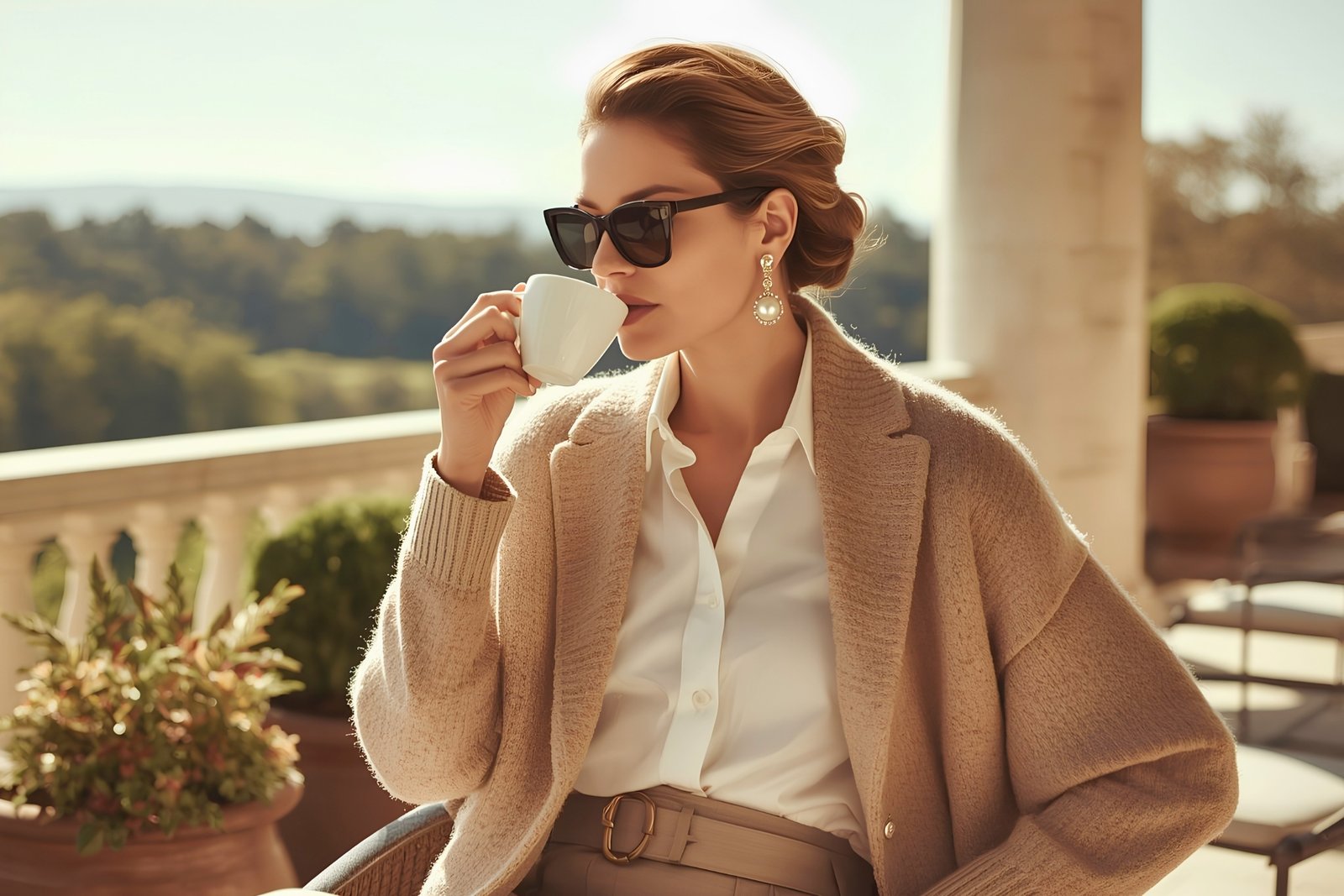
Investment in classics, indifference to trends. Polo shirts, tailored blazers, oxford button-downs, chinos, loafers, ballet flats, simple knitwear in neutral tones — these are the building blocks. They don’t look dated because they were never particularly current. They exist outside of trend cycles entirely, which is precisely the point.
The color palette is restrained. Navy, cream, camel, white, forest green, burgundy, chocolate brown, soft gray — these are the shades that dominate. Not because color is wrong, but because these particular colors have an enduring, timeless quality that brighter or trendier shades don’t. They also photograph beautifully and age well, which matters when you’re keeping pieces for years.
Logos are essentially absent. This is perhaps the most defining characteristic of old money style, and the one most at odds with how luxury fashion typically markets itself. The old money perspective on logos is simple: if you need to tell people something is expensive, it probably isn’t. Quality speaks for itself through fabric, construction, and fit — not through a name printed across the chest.
Fit is everything. Clothes are tailored. Not dramatically — old money style is never theatrical — but precisely. Shoulders sit correctly. Hems fall exactly where they should. Trousers break at just the right point. This attention to fit communicates something that no logo ever could: that the clothes were made for this specific person, or adjusted to fit them perfectly, which amounts to the same thing.
The details are sporting and collegiate. Equestrian influences — riding boots, quilted jackets, heritage outerwear. Collegiate references — varsity knits, blazers with crests, rowing club aesthetics. These details root old money style in specific institutions and activities that have historically been associated with generational privilege: sailing, tennis, polo, rowing, horse riding. You don’t need to do any of these things to adopt the aesthetic, but understanding the references helps explain why certain pieces look the way they do.
The Key Pieces
If you want to build an old money wardrobe, these are the pieces that do the most work:
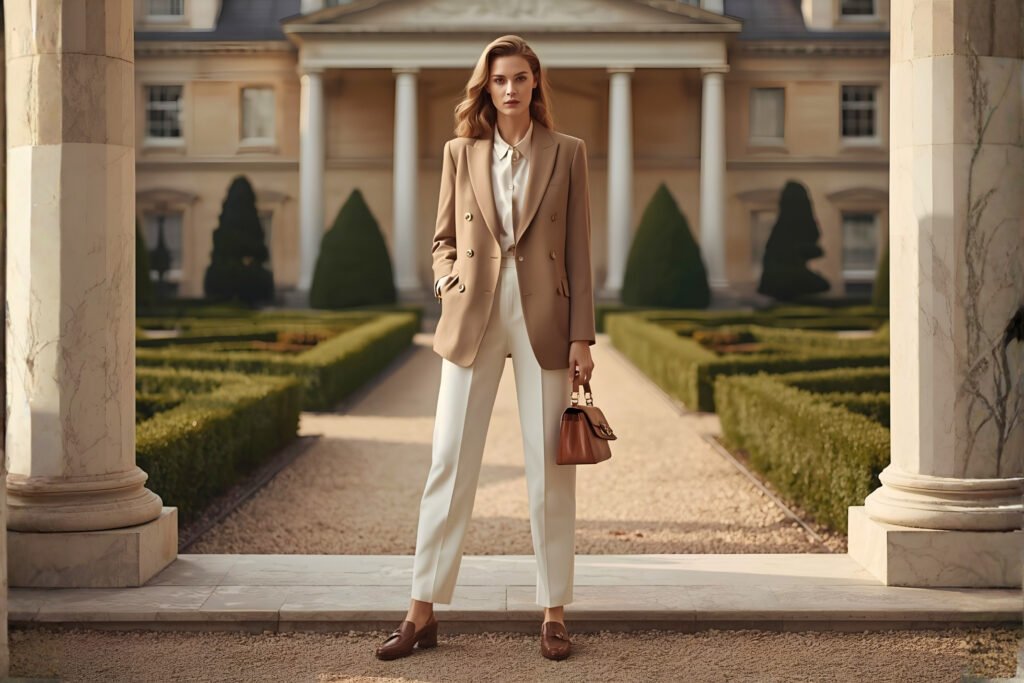
The Blazer — Ideally in navy, camel, or a subtle tweed or plaid. Well-fitted, classic lapels, no excessive embellishment. This is the cornerstone of the entire aesthetic.
Oxford Shirts — White and light blue, in a quality cotton that gets softer with washing. Worn tucked in, sometimes with the collar slightly open, occasionally with a fine knit sweater over the top.
Chinos and Tailored Trousers — In camel, navy, cream, or olive. A proper fit through the seat and thigh, with a clean break at the shoe.
Knitwear — Cashmere where possible, merino as an alternative. Crew necks, V-necks, turtlenecks in the classic color palette. Worn over collared shirts or alone with tailored trousers.
Loafers — Penny loafers or horsebit loafers in tan, chocolate, or dark brown leather. Possibly the single most recognizable footwear item in the entire aesthetic.
Ballet Flats — For a more feminine wardrobe, simple leather ballet flats in neutral shades carry the same quiet elegance as loafers.
A Trench Coat — The longer the better, in a classic camel or khaki. Belted properly. One of the few pieces that can instantly elevate almost any outfit underneath it.
Simple Leather Accessories — A structured leather bag with minimal hardware. A classic leather belt. A simple watch with a leather strap. The accessories are quiet and well-made, and they last for years.
The Home
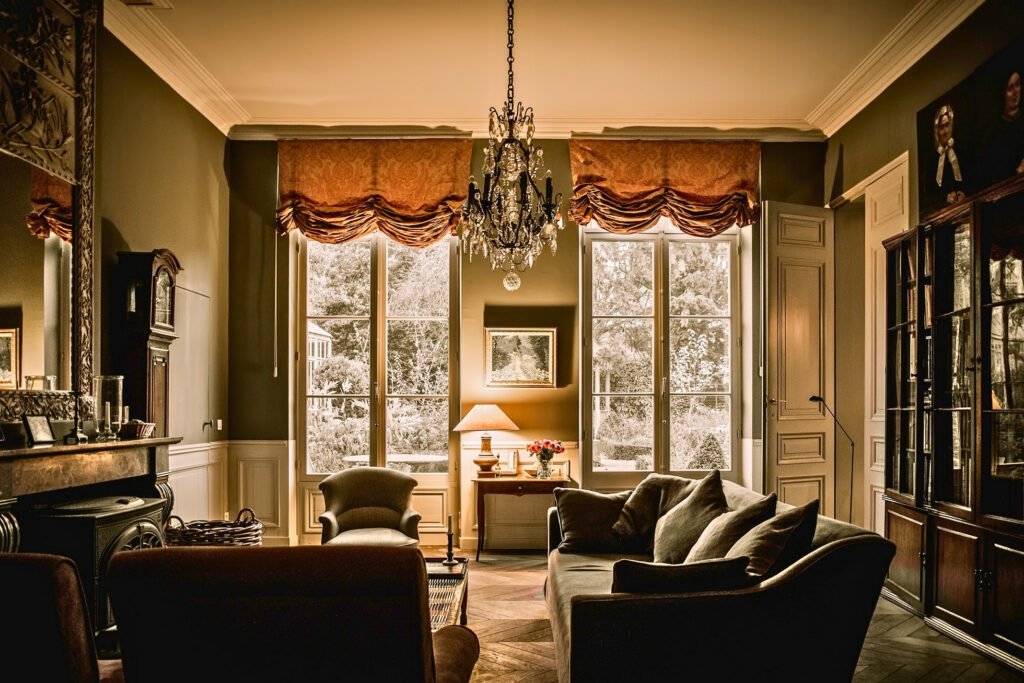
Old money interiors share the same philosophy as old money clothing: quality materials, timeless design, and a complete indifference to what’s currently trending in home décor.
The palette is warm and layered — aged wood, worn leather, linen and wool in cream and camel and deep navy. There are Persian rugs that have been on the floor for forty years. Bookshelves that are full of actual books that have actually been read. Artwork that was chosen because someone loved it, not because it matched the sofa.
Everything looks slightly worn in the best possible way. The leather armchair has developed a patina. The dining table has marks on it from years of meals. The linen curtains have faded imperceptibly from sunlight. This is not neglect — everything is well-maintained — but it’s the natural aging of quality materials that have been used and loved over time.
There’s no sense that the home was decorated all at once from a single store. Instead it looks accumulated — like pieces were chosen over decades, inherited from family members, brought back from travels. A silver candlestick that belonged to a grandmother. A painting bought on a trip to Europe thirty years ago. A lamp that has sat on the same table for as long as anyone can remember.
That sense of history is something you genuinely cannot manufacture overnight. But you can work toward it by choosing pieces with longevity in mind — things that will age beautifully rather than simply wear out.
The Lifestyle
The old money lifestyle is quieter than you might expect, and considerably less glamorous than social media sometimes suggests.
It’s mornings that aren’t rushed. A proper breakfast, eaten sitting down. Reading an actual newspaper or a book rather than scrolling through a phone before you’ve been awake for five minutes.
It’s physical activity that’s enjoyable rather than punishing — walking, swimming, tennis, sailing, riding, golf. Exercise that takes place outdoors and often involves other people, because it’s also social and because the activity itself is genuinely pleasurable.
It’s hosting at home rather than always going out. A dinner party where the food is simple but genuinely good. Drinks in a comfortable sitting room with people you’ve known for years. The pleasure of a home that functions well and welcomes guests easily.
It’s relationships that have depth and history. The same friends for decades. Family connections that are maintained with genuine care rather than obligation. A social life that’s not particularly large but is genuinely nourishing.
It’s taking care of things — clothes, objects, spaces, relationships — rather than replacing them when they show wear. The old money mindset is fundamentally opposed to disposability in all its forms.
And perhaps most characteristically, it’s a total absence of urgency around acquiring more. The old money personality is not restless in a consumer sense. There isn’t a constant list of things they want to buy or places they want to be seen. What they have is enough, and they know it, and that knowledge produces a particular kind of calm that is genuinely difficult to fake.
Why It’s Resonating Right Now
The old money aesthetic has exploded in popularity at a very specific cultural moment, and it’s not hard to understand why.
We’re living through a period of profound consumer fatigue. Fast fashion, disposable trends, the relentless churn of social media aesthetics that are popular for six months and then gone — people are exhausted by it. The promise of the old money aesthetic is the opposite of all of that: permanence, quality, restraint, and a relationship with your possessions that’s based on genuine love rather than novelty.
There’s also something appealing about the confidence at the heart of it. Old money style doesn’t ask for approval. It doesn’t follow trends because it doesn’t need to. It’s not performing anything for anyone. That kind of quiet self-assurance is deeply attractive, particularly in a culture where almost everything is performed for an audience.
And then there’s the sustainability angle, which isn’t always discussed but is genuinely significant. Buying less, buying better, maintaining what you have, keeping things for decades rather than seasons — this is exactly what sustainable fashion advocates have been asking for. The old money approach to consumption is, almost incidentally, one of the most environmentally responsible ways to relate to material goods.
How to Adopt the Aesthetic Without the Trust Fund
Here’s the part that actually matters for most of us: you don’t need generational wealth to embody the old money aesthetic. What you need is a shift in perspective.
Stop buying trends. Every time you’re tempted by something that’s popular right now, ask yourself whether you’ll still want it in five years. If the honest answer is probably not, put it back.
Invest in classics slowly. You don’t need to build the wardrobe overnight. Add one well-made, timeless piece at a time — a good blazer, a quality cashmere sweater, a pair of leather loafers that will last a decade. Over time, the pieces accumulate into something that genuinely reflects the aesthetic.
Take care of what you have. Maintain your clothes, your shoes, your home. Repair things rather than replacing them. Let quality items develop the kind of wear that communicates history rather than neglect.
Edit relentlessly. Old money spaces and wardrobes are not full. They’re curated. Be ruthless about what you keep and thoughtful about what you bring in.
Cultivate the mindset, not just the look. The most convincing part of the old money aesthetic isn’t the clothes or the interiors — it’s the unhurried, unperformed quality of the life being lived. That starts with genuinely not caring what people think of what you own, which is harder than it sounds and more rewarding than almost anything else on this list.
The Bottom Line
The old money aesthetic is, at its heart, a philosophy about the relationship between people and their possessions — one that prioritizes quality, longevity, and genuine pleasure over novelty, status, and performance.
It looks like a navy blazer worn for twenty years. It looks like a home full of things that have stories. It looks like a life that doesn’t need to prove anything to anyone.
And the most interesting thing about it is this: the people who actually embody it aren’t thinking about the aesthetic at all. They’re just living — quietly, comfortably, and with a kind of ease that comes not from having more, but from needing less.
That’s the real secret of old money. And it turns out it was never really about the money at all.