
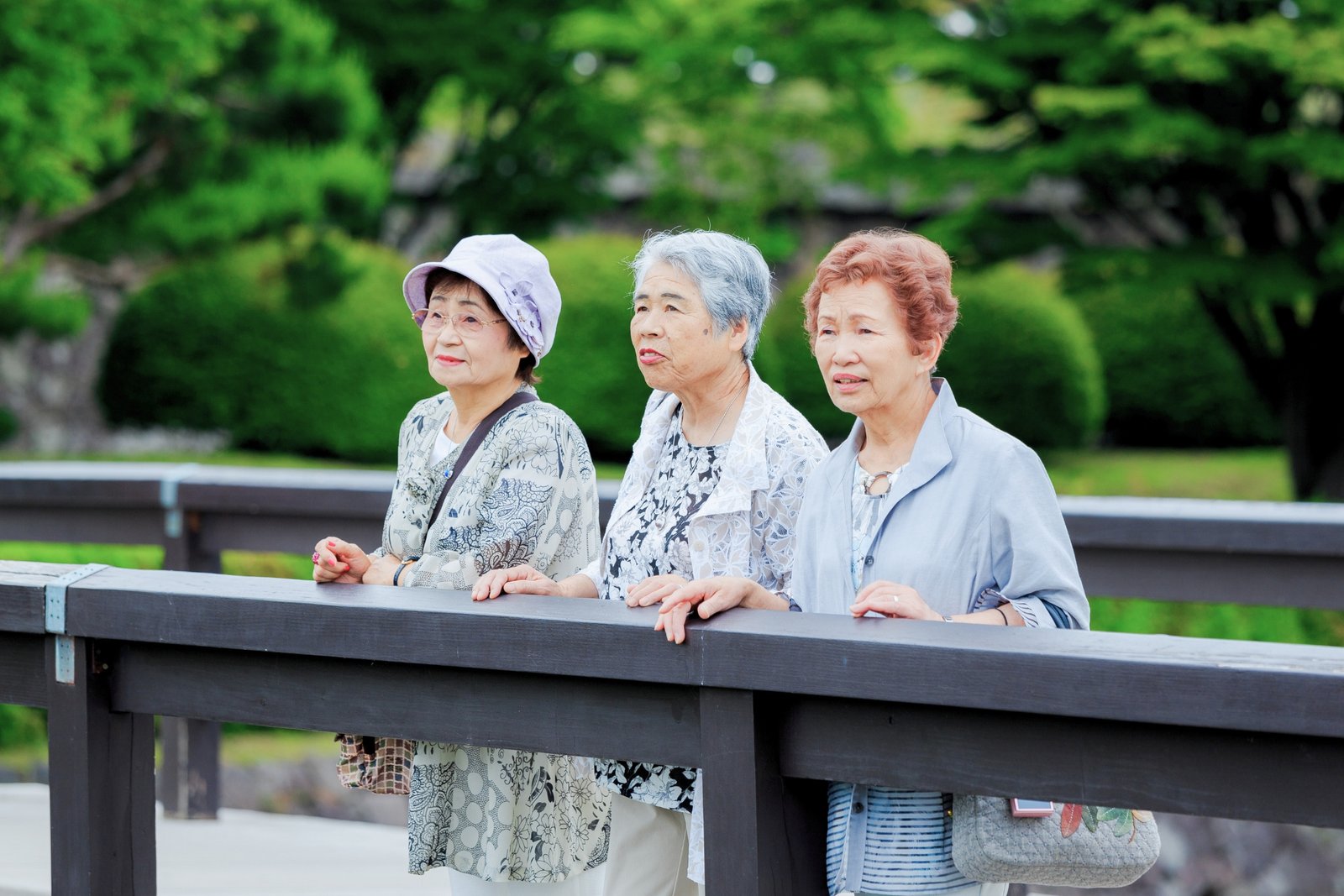
Japan has just reached a remarkable milestone.
For the first time since the country began keeping records in 1963, more than 100,000 people in Japan are aged 100 or older.
According to Japan’s Ministry of Health, Labour and Welfare, the number reached 107,677 as of September 1, 2026 — an increase of 7,914 from the previous year and the 56th consecutive annual increase. Women account for 94,298 of those centenarians, or about 87.6%.
Japan’s life expectancy is also among the highest in the world. World Bank data put Japanese life expectancy at birth at 84 years in 2024, while OECD data similarly report life expectancy of about 84 years.
So what is happening in Japan?
There isn’t one magic ingredient. And it would be too simplistic to say that every Japanese person follows the same lifestyle.
But researchers have identified several patterns that may help explain why Japan has such high longevity.
1. Food is an everyday habit, not a temporary diet
The traditional Japanese diet is often mentioned when researchers discuss longevity.
Think about a typical Japanese meal: fish, vegetables, tofu or other soy foods, rice, seaweed, mushrooms, soup and small portions of several different dishes.
Instead of one enormous main course, meals often contain variety and moderation.
Fish provides protein and beneficial fats, while vegetables, seaweed, mushrooms and soy foods contribute fiber and micronutrients.
Japan’s dietary culture has also traditionally emphasized relatively modest portions and a wide variety of foods.
But there is an important caveat: Japanese food isn’t automatically healthy. Some traditional foods can be high in sodium, particularly dishes involving soy sauce, miso and salted foods.
So the lesson isn’t necessarily “eat exactly what Japanese people eat.”
It may be closer to:
Eat a variety of mostly minimally processed foods, and pay attention to portions.
2. Healthcare and prevention matter
Lifestyle gets much of the attention when people talk about Japanese longevity, but healthcare is an equally important part of the story.
Japan has broad healthcare coverage, and the OECD reports that the entire population is covered for a core set of healthcare services. Japan also performs above the OECD average on several measures of healthcare access and quality.
Japan also has a long-standing emphasis on preventive health and health examinations.
That matters because living longer isn’t simply about avoiding illness through lifestyle.
It’s also about detecting and treating problems before they become catastrophic.
The OECD reports that Japan’s preventable and treatable mortality rates are both below OECD averages.
In other words, longevity is partly a lifestyle story — but it is also a public-health story.
3. Movement is often built into everyday life
You don’t necessarily need an intense workout to benefit from being physically active.
Walking, cycling, taking public transportation, climbing stairs and simply moving throughout the day can create a significant amount of everyday physical activity.
Japan isn’t perfect on this measure. In fact, the OECD estimates that 51% of adults in Japan did not perform sufficient physical activity, so it would be misleading to portray the entire country as exceptionally active.
Still, the structure of daily life in many Japanese communities can naturally encourage walking and movement.
And that may be an important distinction:
Exercise doesn’t always have to look like exercise.
A walk to the train station counts.
Walking to the neighborhood shop counts.
Gardening counts.
Taking the stairs counts.
Movement accumulated throughout the day matters.
4. Staying connected to a reason to get up in the morning
This is where the Japanese concept of ikigai often enters the longevity conversation.
Ikigai is frequently translated as “a reason for being” or “a reason to live,” although the concept is more nuanced than the simplified versions sometimes seen online.
Researchers have actually studied the relationship between ikigai and health.
One large Japanese prospective study involving more than 80,000 adults found that having ikigai was associated with lower long-term mortality, even after adjusting for numerous factors.
Another study of older Japanese adults found that having ikigai was associated with a lower risk of developing functional disability and dementia over the following three years, along with better measures of psychological and social wellbeing.
That doesn’t prove that ikigai causes people to live longer. These are observational studies, so other factors may contribute.
But the idea is fascinating.
Having something that feels meaningful — caring for family, gardening, teaching, creating art, working, volunteering, pursuing a hobby or simply having something to look forward to — may be an important part of aging well.
5. Aging doesn’t necessarily mean stopping
One interesting theme in Japanese longevity research is the difference between simply living longer and maintaining a meaningful, functional life for longer.
The OECD reports that Japan has particularly high life expectancy at age 65. In 2023, women in Japan had the highest life expectancy at age 65 among OECD countries, at 28.9 additional years. Japan also reports more than 20 years of expected good health for women at age 60.
That raises a bigger question:
What if the goal isn’t simply to add years to life, but to add life to those years?
Having hobbies, social connections, movement and a sense of purpose can become increasingly important as people get older.
6. The social side of longevity
Longevity isn’t only about what’s on your plate.
It’s also about who is around your table.
Social connection, hobbies and participation in community life can give older adults structure and purpose.
Research involving Japanese older adults has found associations between having hobbies and a sense of purpose and better outcomes related to mortality and daily functioning.
That doesn’t mean everyone needs a huge social circle.
Sometimes it can be much simpler:
A morning walk with a friend.
A weekly lunch.
A gardening group.
A hobby.
A grandchild who calls every Sunday.
A neighbor you regularly see.
Small routines can create a sense of belonging.
7. There is no single “Japanese longevity secret”
This may be the most important takeaway.
Japan’s extraordinary longevity probably cannot be explained by sushi, green tea, ikigai or any other single habit.
It’s a combination of diet, healthcare, public health, socioeconomic factors, lifestyle, genetics, social environment and decades of improvements in living conditions and medical care.
And Japan has its own health challenges.
The country’s very old population is growing rapidly, while its overall population is aging and shrinking. The same longevity that is celebrated as a remarkable achievement also creates significant challenges for healthcare, pensions and social care.
So perhaps the most useful lesson isn’t to try to copy Japan.
It’s to borrow the principles that make sense for our own lives.
Eat a little more intentionally.
Move a little more naturally.
Take preventive health seriously.
Keep learning and doing things you enjoy.
Maintain relationships.
And, perhaps most importantly, have something that makes tomorrow feel worth getting up for.
Because longevity isn’t really about reaching 100.
It’s about making the years along the way feel worth living.
Japan’s remarkable milestone
Among the people currently aged 100 or older in Japan are 114-year-old Fuyo Kishimoto of Kyoto, recognized as the country’s oldest living person, and 112-year-old Hikaru Kato of Kumamoto, the oldest living Japanese man.
More than six decades ago, Japan had just 153 centenarians. The number passed 1,000 in 1981, 10,000 in 1998, 50,000 in 2012 — and now, in 2026, it has crossed 100,000.
That’s not simply a statistic.
It’s a reminder that the way we eat, move, connect, receive healthcare and find meaning can shape not only how long we live, but how we experience the years we have.
Sources: Japan Ministry of Health, Labour and Welfare; World Bank; OECD; peer-reviewed studies indexed by PubMed.