
There’s a persistent myth in interior design that luxury requires space. That you need high ceilings and wide hallways and rooms you can cross in more than four steps before a home can feel truly elegant. It’s not true — and some of the most beautiful, considered interiors in the world happen to be small ones.
What small spaces actually require is more intention, not more square footage. Every decision matters more when you have less room to make mistakes, which sounds like a constraint but is actually a creative advantage. You’re forced to choose carefully, edit ruthlessly, and think about how every element works with every other element. The result, when it’s done well, is a space that feels cohesive and considered in a way that larger rooms rarely achieve.
Here’s how to get there.
Start With the Edit
Before you buy anything, add anything, or change anything — edit what’s already there.
Clutter is the single biggest enemy of a luxurious-feeling space, and in a small room it’s even more destructive because there’s nowhere for it to hide. Every surface that’s covered, every corner that’s stacked, every shelf that’s overfull adds visual noise that makes a room feel smaller, cheaper, and more chaotic than it actually is.
Go through the space with genuinely critical eyes. Ask not “do I like this?” but “does this earn its place here?” A small space doesn’t have room for things that are merely fine. Everything that stays should be something you either use regularly, find genuinely beautiful, or both.
This editing process is free and it’s often the single most transformative thing you can do to a small space. An empty surface reads as intentional. A cleared corner suddenly has breathing room. A shelf with six well-chosen objects looks curated in a way that the same shelf with thirty objects never will.
Get the Color Right
Color does more work in a small space than almost any other decision you’ll make, and the conventional wisdom — paint everything white to make it feel bigger — is only partially right.
White works. A warm white, specifically, makes walls recede and light bounce in ways that genuinely open a space up. But it’s not the only option, and for some rooms it’s not even the best one.
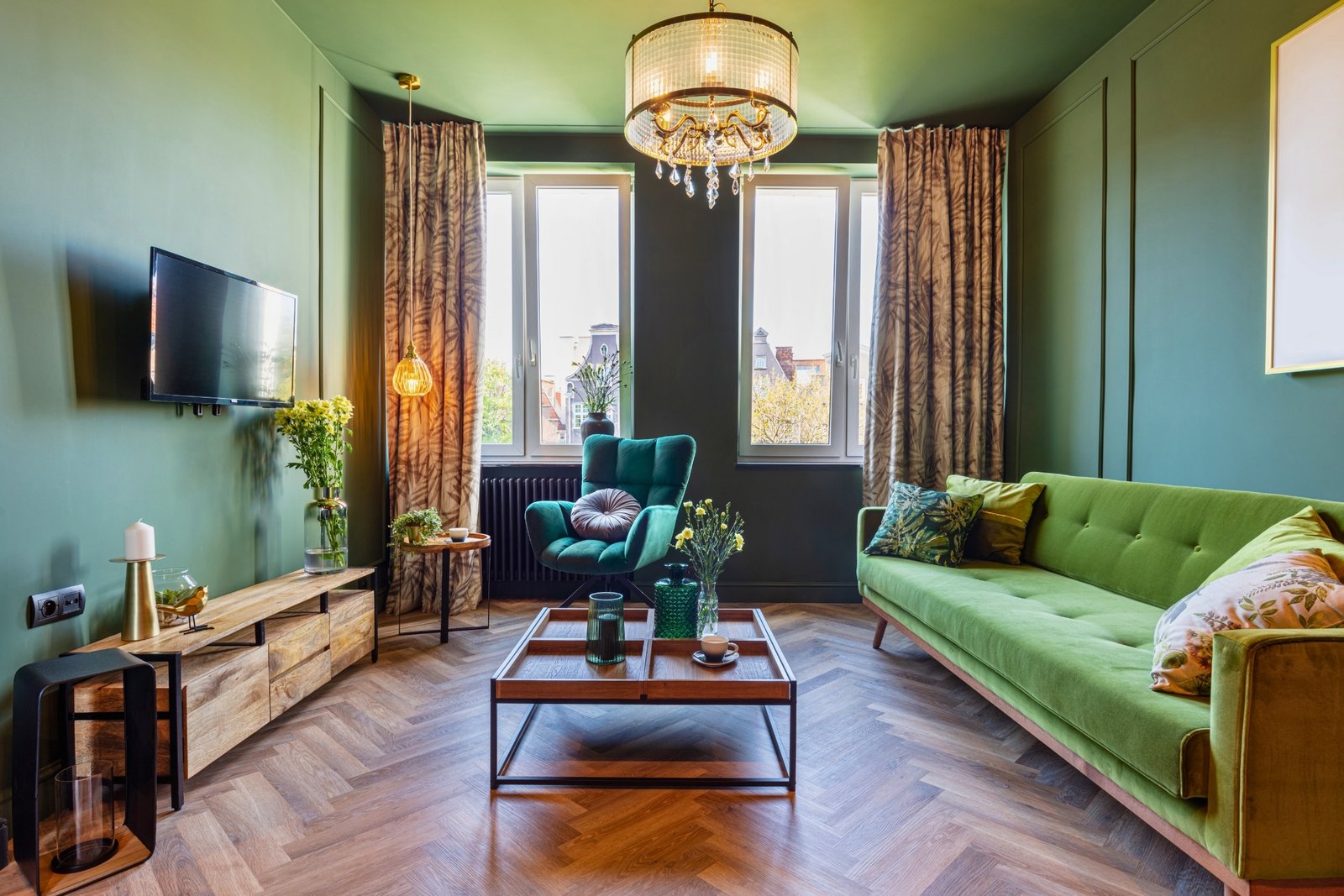
There’s a design approach called enveloping — painting walls, ceiling, and sometimes even trim in the same tone — that can make a small room feel surprisingly expansive and intentional. A deep warm taupe or a soft sage applied to every surface creates a cocooning effect that feels luxurious rather than cramped. Some of the most beautiful small rooms in the world are painted in colors that should feel heavy but somehow feel exactly right.
The key principle, whatever color you choose, is cohesion. A small space that moves through several different colors feels choppy and smaller than it is. A small space with a single considered palette feels calm and complete.
Treat the Walls Like They Matter
In a small space, walls are not just background — they’re doing active work in the design. How you treat them makes an enormous difference to how the room feels.
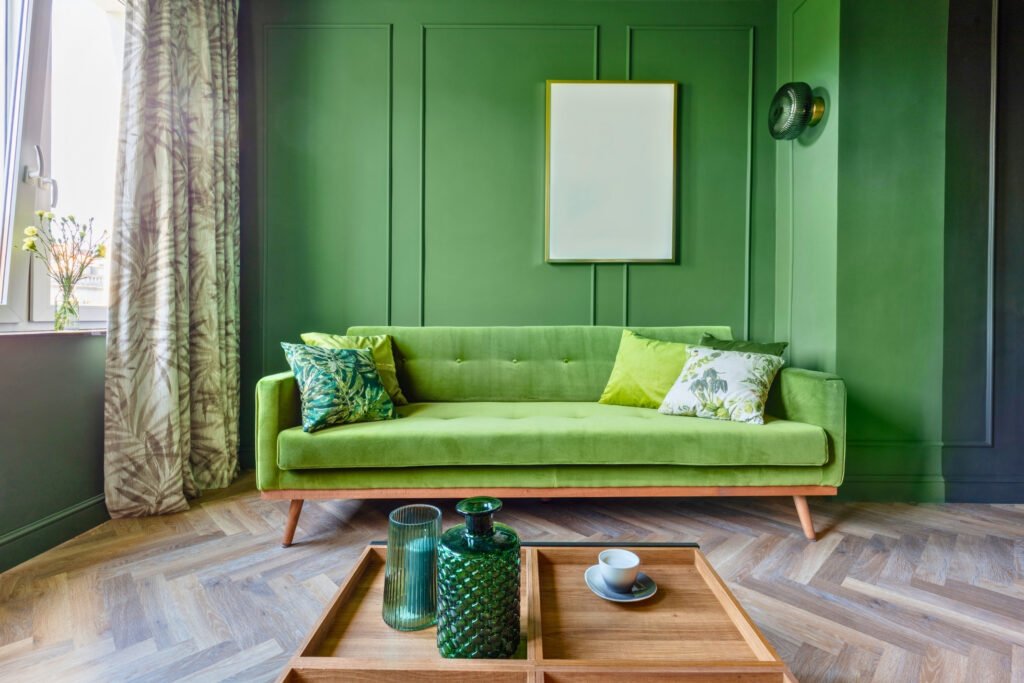
Molding and architectural detail are one of the most underrated tools available. Chair rails, picture rails, simple panel molding applied directly to a flat wall — these details add depth and craftsmanship to a space without taking up any floor area at all. They signal that the room was thought about, which is exactly the impression luxury requires.
A single piece of art, chosen well and hung correctly, does more for a room than a gallery wall of things you feel lukewarm about. The most common hanging mistake is placing art too high — it should generally sit at eye level, which is lower than most people instinctively hang it. A well-chosen piece in the right place can anchor an entire room.
Mirrors, used with intention, genuinely expand a small space — not as a trick, but because they bring light and depth into a room that might otherwise feel flat. A large mirror leaning against a wall rather than hung on it has a relaxed, considered quality that feels more luxurious than the alternative.
Think Carefully About Furniture
Furniture is where small spaces most commonly go wrong, and it usually happens in one of two ways: everything is too small, in a misguided attempt to “fit more in,” or there’s simply too much of it.
Scale matters more than size. Counterintuitively, one well-proportioned larger piece often looks better in a small room than several small ones. A generous sofa in a small living room anchors the space and gives it presence. A room full of small, delicate furniture can feel cluttered and indecisive.
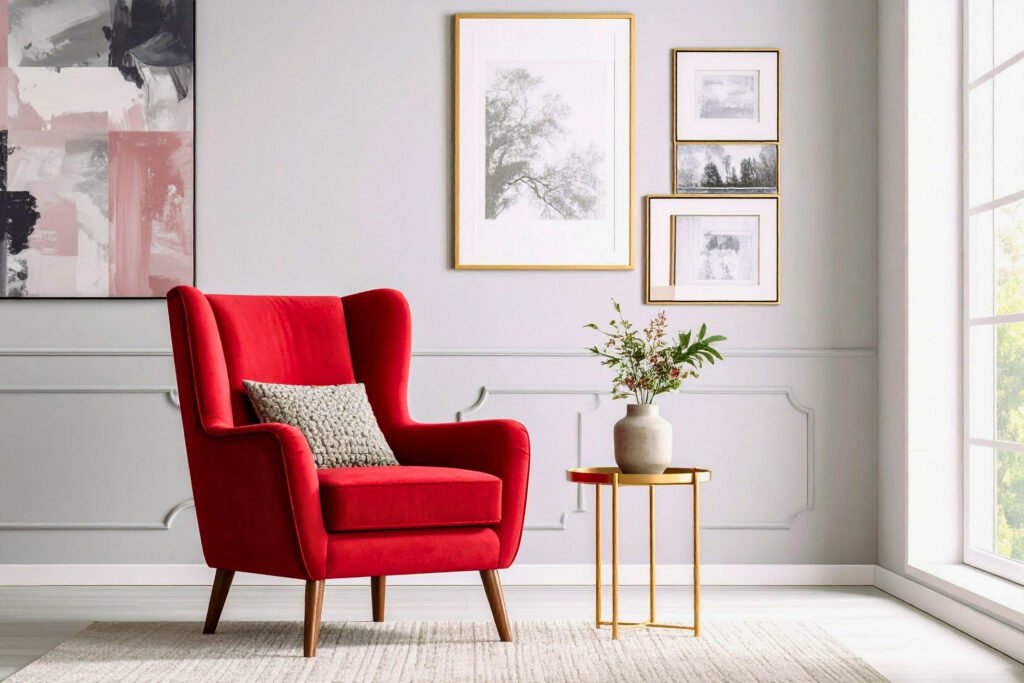
Choose pieces with presence and purpose. In a small space, every piece of furniture should earn its place by being either beautiful, functional, or ideally both. A coffee table with storage. A bed frame that’s genuinely beautiful rather than merely adequate. A chair that you actually love to sit in. These choices matter more in a small space because each piece takes up a proportionally larger share of the room.
Legs are your friend. Furniture with visible legs — sofas, chairs, side tables raised off the floor — allows light to travel underneath and makes a room feel less visually heavy. Low, legless furniture that sits directly on the floor tends to make small spaces feel more enclosed.
Leave breathing room. The temptation in a small space is to fill every corner and use every wall. Resist it. Empty space is not wasted space — it’s what allows the pieces you do have to be seen and appreciated. A room that has space to breathe always feels more luxurious than one that doesn’t.
Get the Lighting Right
Nothing transforms a space more dramatically or more affordably than lighting, and in small spaces it’s especially powerful because it controls how the room feels at every hour of the day.
The goal is layers. A single overhead light source — the default in most homes — creates flat, unflattering illumination that makes even beautiful rooms look ordinary. What you want instead is a combination of sources at different heights: ambient light for the overall room, task lighting where you need to see clearly, and accent lighting that creates warmth and mood.
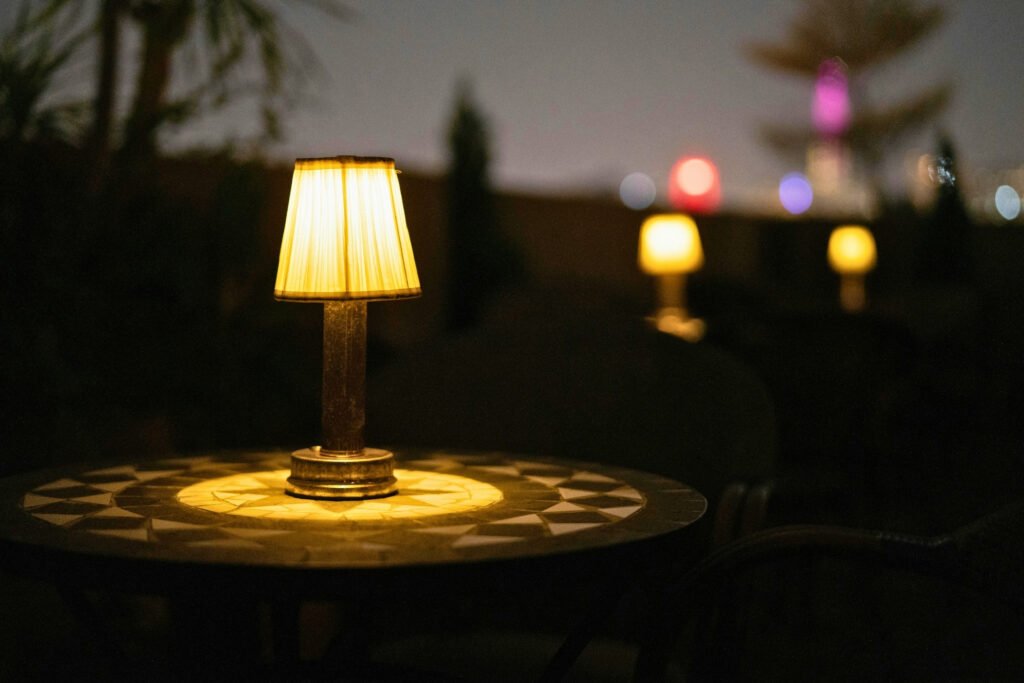
Table lamps are one of the most effective tools in a small space. They bring light down to a human scale, create warmth and intimacy, and add visual interest at the same time. A pair of matching lamps on either side of a sofa or bed creates a sense of symmetry and intention that reads as genuinely expensive.
Sconces are worth considering if you’re willing to do a little electrical work — or there are plug-in versions that require nothing more than a hook and a cord. They free up surface space while adding light at exactly the right height.
Warm bulbs always. The color temperature of your bulbs matters enormously. Cool, bluish light makes spaces feel clinical. Warm light — around 2700K — makes everything look better: the room, the furniture, and the people in it.
Dimmer switches are cheap to install and completely change how a space feels in the evening. The ability to drop the light level by half transforms a room from functional to genuinely atmospheric.
Bring In Texture
When a small space has limited square footage and a restrained color palette — both of which are usually the right call — texture becomes the primary tool for adding richness and visual interest.
The combination of different textures in a single neutral palette is what separates a space that feels expensive from one that feels flat. Think linen cushions against a velvet sofa. A chunky knit throw over a smooth leather chair. A jute rug under a polished wood coffee table. These combinations add depth and warmth without adding visual noise.
Natural materials always read as more luxurious than synthetic ones, even in small quantities. A wooden bowl on a shelf, a marble coaster on a side table, a linen pillowcase — these small touches register at the level of quality in a way that plastic and cheap synthetics never will.
Rugs are particularly important in small spaces because they define zones within the room and anchor furniture groupings in a way that makes a single room feel intentional rather than arbitrary. Choose one that’s large enough — the most common mistake is choosing a rug that’s too small, which makes a room feel disconnected and unresolved.
Edit Your Surfaces
In a large home, surfaces can absorb a certain amount of accumulation. In a small space, they can’t. Every surface — the coffee table, the kitchen counter, the bedside table, the entry shelf — needs to be curated rather than merely used.
This doesn’t mean empty. An entirely empty surface can look sterile. It means considered — a small grouping of objects that work together, leaving enough space around them that they can be seen properly.
The principle of odd numbers works well here: three objects of varying heights tend to look more interesting than two or four. A candle, a small plant, and a beautiful object. A book, a lamp, and something personal. These small arrangements are what make a space feel lived-in and loved rather than staged.
Fresh flowers or a single plant do more for a small space than almost any decorative purchase you could make. They bring life, color, and something organic into a room full of manufactured things — and they signal that someone cares about how the space feels on a daily basis, not just when guests are coming.
The Small Details That Signal Quality
Luxury in a small space is often communicated through details so small that most people couldn’t identify them consciously — but they register nonetheless.
Good hardware. Replacing cheap cabinet handles and drawer pulls with something solid and well-designed is one of the highest-return improvements you can make in a kitchen or bathroom. It costs relatively little and the difference is disproportionate.
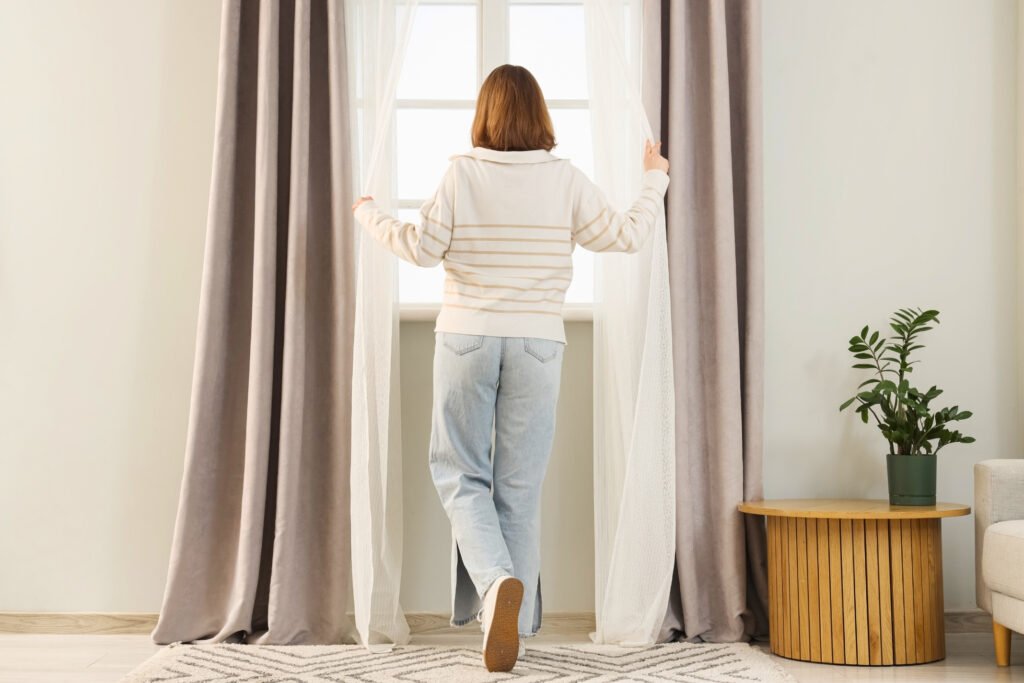
Quality textiles. Heavy linen curtains that puddle slightly on the floor. A duvet cover in a fabric that feels good. Thick, absorbent towels in a consistent color. These things are touched and felt every day, which means they communicate quality at a level that purely visual elements don’t.
Matching and cohesive. In a small space, visual consistency matters more than in a larger one. Matching your storage containers, using a consistent metal tone throughout the space, choosing cushions that belong to the same color family — these details create a sense of calm and intention that registers as expensive even when nothing individually is.
The Mindset Shift That Changes Everything
The deepest change required to make a small space feel luxurious is a shift in how you think about it.
Stop treating it as a problem to be solved — a limitation to work around — and start treating it as a constraint that forces good design. Because that’s what it actually is.
Small spaces demand that you know what you love, keep only what you use, and make every decision count. Those aren’t hardships. They’re the conditions under which the best design happens.
The most beautiful small spaces in the world don’t look like they’re apologizing for their size. They look complete — as if exactly the right amount of space was given to exactly the right things. That’s not an accident, and it’s not about budget. It’s about intention.
And intention, it turns out, is the most luxurious thing you can bring to any space — regardless of how many square feet you have to work with.
A small space done well doesn’t make you wish for more room. It makes you wonder why you ever thought you needed it.